A multilingual chatbot helps every visitor straight away in their own language, without needing a member of staff for each language. A French-speaking visitor gets an answer in French, a German customer in German. That sounds like translation, but the difference lies in the details: the right tone, the right terms and a person who can take over in the right language.
What a multilingual chatbot does
A multilingual chatbot recognises which language a visitor is writing in and conducts the whole conversation in that language. The visitor does not have to choose a language from a menu. They type their question, the AI understands what they mean and replies in the same language, based on your business’s information.
For businesses that sell across borders, that is no luxury. Part of your visitors may speak another language, and anyone researching a car or a kitchen wants to do so in their own language. According to CSA Research, which surveyed almost 9,000 consumers in 2020, 75% are more likely to buy from a brand again if customer care is in their own language. How conversational AI works in general is explained in what is conversational AI.
Multilingual customer contact is one of the applications of AI in your business. Which others there are is covered in AI in business.
How multilingual AI holds a conversation
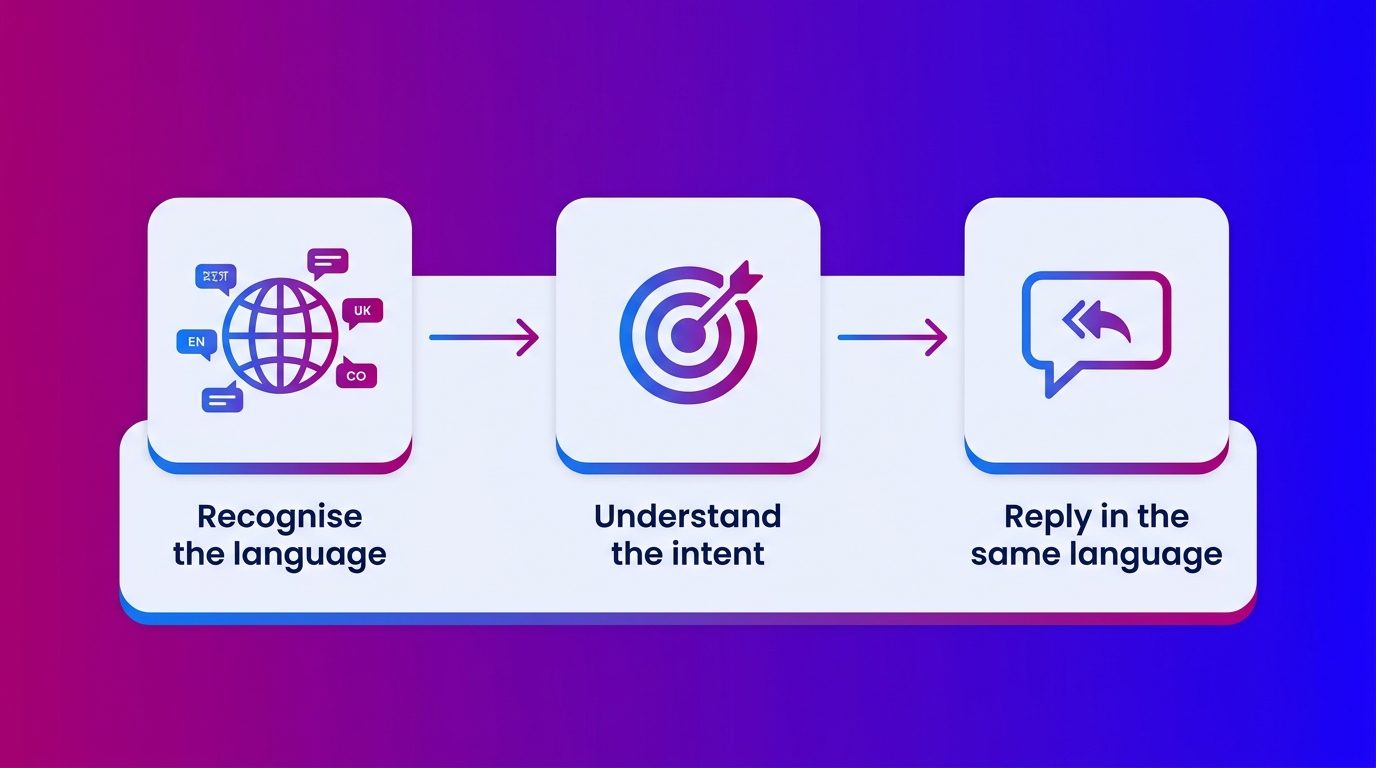
Multilingual AI holds a conversation in three steps: it recognises the language, understands the intent and replies in the same language.
- Recognising the language. The AI reads the first message and determines the language. A visitor who types “Bonjour, est-ce que cette voiture est encore disponible ?” gets the conversation in French.
- Understanding the intent. The AI does not translate word for word, but understands what someone wants. A question about availability is often the start of a test-drive request.
- Replying in the right language. The answer comes from the same knowledge base as in English, but is given in the visitor’s language and tone.
If a visitor switches language halfway through, for example from French to English, the AI switches too without losing the context of the conversation.
Where multilingual support makes the difference
Multilingual support makes the biggest difference at the moments when a visitor would otherwise drop off: at the first question, at the enquiry and after the purchase.
- The first question. A visitor who does not get an answer in their own language rarely fills in a contact form in another language. An immediate answer in their language keeps them engaged.
- The enquiry. The AI asks the questions your sales team needs and records the language preference. That goes with the lead into the CRM, so the salesperson knows which language to follow up in. More about that process in AI lead generation.
- After the purchase. Questions about delivery, servicing or warranty come in in every language. A multilingual AI chatbot answers them straight away, in the evening too.
Customers do not only ask their questions on the website, either. If you also use WhatsApp and email, you want the language and the conversation to carry over when the customer switches channel. You arrange that with omnichannel customer contact.
What we see in multilingual conversations
At Bconnect, AI and our chat specialists hold conversations for businesses in several countries and languages. Our chat specialists work in Dutch and French, and the AI can also answer in many other languages, including English and German.
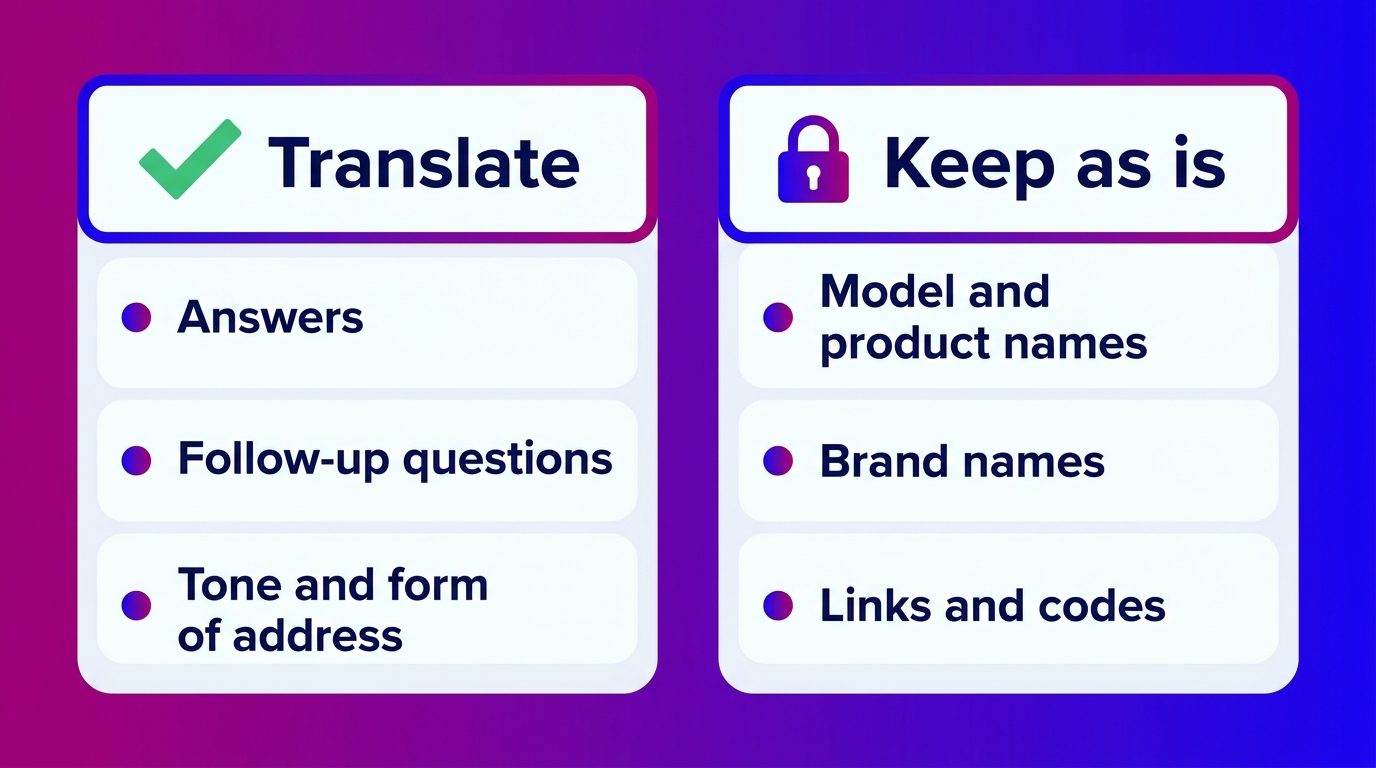
The most common problem is translating too much. A generic translator turns a model name into an ordinary word, translates a product link so it no longer works, or changes a brand name. For a car dealer or kitchen showroom, the answer is suddenly no longer correct. That is why we record for each client which terms, names and links always stay untranslated.
The second point is tone. What sounds friendly in one language can come across as too familiar in another, for example the informal “tu” in French. We tune the form of address and tone for each language to the client’s brand. And if a question becomes too complex, a chat specialist takes over in the same language, with the whole conversation attached. That way a French-speaking customer does not suddenly have to switch languages.
Setting up a multilingual chatbot properly
You set up a multilingual chatbot from one knowledge base, with clear agreements on what is and is not translated and who takes over in which language.
- One knowledge base as the source. Keep one set of answers and have the AI give them in the right language. That prevents one language version from lagging behind another.
- Record what is not translated. Model names, product names, brand names, links and codes always stay as they are.
- Arrange the handover per language. Decide which staff speak which languages and what happens if no member of staff is available in that language.
- Mind privacy. In a multilingual conversation, customers also share personal data. Under UK GDPR you may not collect more data than you really need or keep it longer than necessary; the ICO’s guidance on AI and data protection explains how that applies to AI.
What such a project looks like step by step is covered in implementing conversational AI.
Multilingual means more than translating
A multilingual chatbot helps visitors straight away in their own language and stops them dropping off at a language barrier. It only really works if the AI leaves the right terms untranslated, adapts the tone for each language and can hand the conversation over to a person in the same language. Start with the languages your visitors actually speak, and build from there.
Frequently asked questions about a multilingual chatbot
Can a chatbot answer in several languages?
Yes. A chatbot that runs on conversational AI can understand and answer questions in many languages. It recognises the visitor’s language and conducts the whole conversation in that language, based on your business’s information.
Does AI automatically recognise the visitor’s language?
Yes. The AI determines the language from the first message. The visitor does not have to choose a language from a menu, but can ask their question straight away.
Can AI switch language within one conversation?
Yes. If a visitor starts in French and continues in English, the AI switches too. The context of the conversation is kept.
Which languages are supported?
Modern language models work in many languages, including English, French, German and Dutch. Choose the languages based on the visitors you actually have.
Do I still need multilingual staff?
For most questions you do not, because the AI handles them in every language. For complex or sensitive conversations, a member of staff who speaks the language remains valuable. So decide in advance who takes over in which language.
How do you prevent translation errors?
Record which terms are never translated, such as model names, product names, brand names and links. Work from one knowledge base and regularly check conversations in each language, so errors stand out quickly.
What about privacy in multilingual customer contact?
Multilingual customer contact is subject to the same rules as any other customer contact, which in the UK means UK GDPR. Do not collect more personal data than necessary and do not keep it longer than needed.