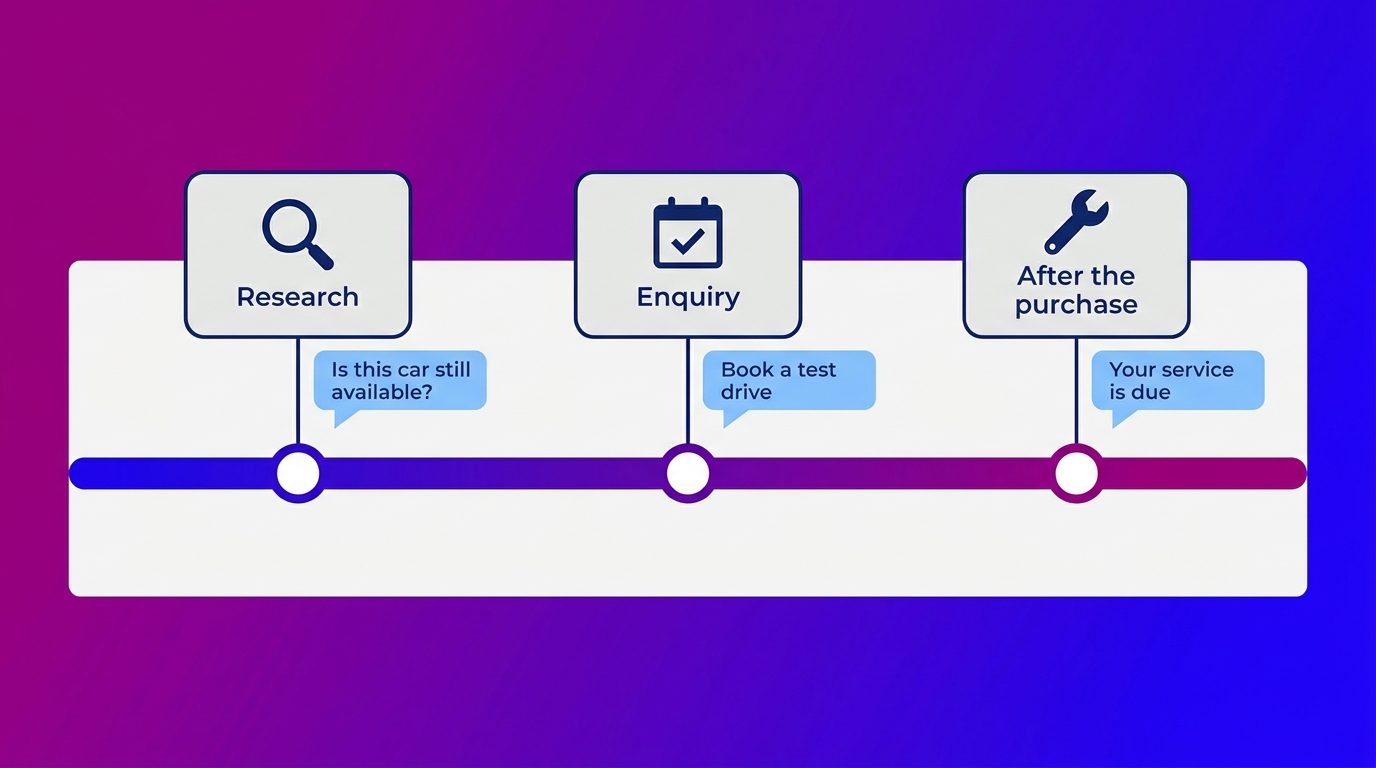
You see conversational AI examples mainly at the moments when a customer has a question: before the purchase, at the enquiry and afterwards. A car dealer has AI gather the details of a test-drive request, a kitchen showroom answers questions about bespoke work in the evening, and after the purchase AI arranges appointments and reminders. Below are the main examples, for each moment in the customer journey.
What conversational AI does in practice
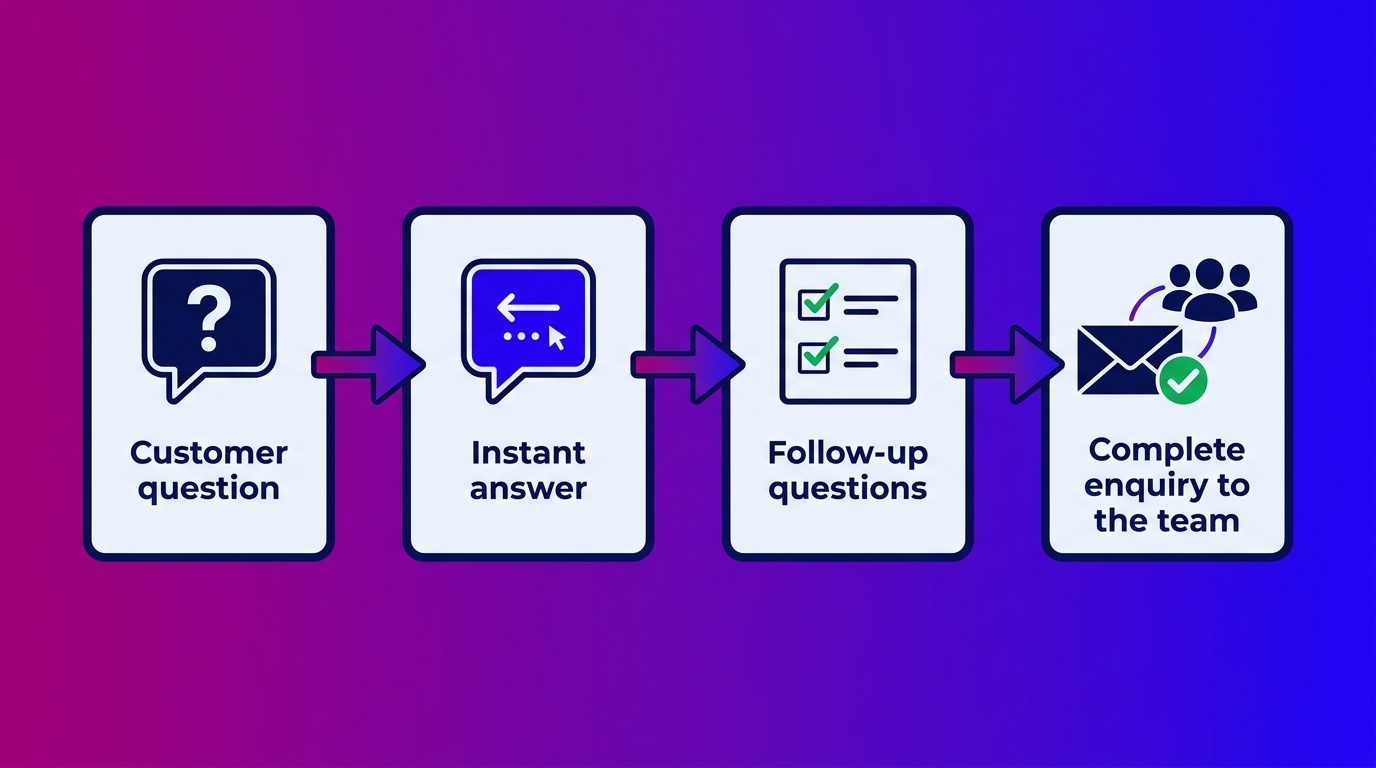
Conversational AI holds conversations with customers in everyday language, based on the business’s own information. In practice that comes down to three things: answering questions straight away, asking follow-up questions until an enquiry is complete, and helping the customer further after the purchase. Where the AI cannot go further, a person takes over.
The examples below come from the two sectors where we work most: automotive and home and living. Customers there take a long time to decide, ask a lot of questions and a good enquiry is worth a lot. How conversational AI works technically is explained in how does conversational AI work.
If you first want to know what the technology involves exactly, read what conversational AI means.
Examples from automotive
In automotive, conversational AI mainly helps with stock questions, test-drive requests and servicing. These are questions that often come in outside opening hours and quickly turn into a sales opportunity.
Requesting a test drive
A visitor is looking at a used car and asks whether it is still available. The AI confirms that, asks whether the visitor would like a test drive and asks the questions the salesperson needs: which day, which branch, and whether there is a car to part-exchange. The complete enquiry goes to the right branch with the whole conversation. More on this in live chat for car dealers.
Technical questions about a model
“How much horsepower does this car have?”, “what is the range?” or “is this covered by the warranty?” The AI looks up the answer in the dealer’s information and gives it straight away. If the answer is not known, the AI makes nothing up and a member of staff takes over.
Servicing and the MOT
After the purchase it is all about service. The AI books a service, answers questions about the workshop and sends a reminder when the MOT is due. You can read more about chat for car dealers on our sector page.
Examples from home and living
In home and living it is about bespoke work: kitchens, windows, bathrooms and staircases. Customers have a lot of questions before they dare to book an appointment, and they often ask those questions in the evening.
Answering a bespoke question
“Can this window be made to measure?” or “is this kitchen available in another colour?” The AI answers the question based on the range and then asks about the customer’s situation: which room, which dimensions, which budget. That way the enquiry comes in complete.
Booking a showroom appointment
People who are interested often want to see the products first. The AI books a showroom appointment or a survey appointment and sends a confirmation. For businesses in this sector, chat and AI for kitchens and windows is therefore often the first step towards more appointments.
Questions about delivery and installation
After the order come questions about the lead time, the installation schedule and what the customer needs to prepare. The AI answers those straight away, so the team does not have to answer the same questions over and over.
What these examples have in common
At Bconnect we see the same pattern in all these examples: the AI does the predictable work, and a person takes over where the difference is made.
The AI answers the questions that keep coming back and asks follow-up questions until an enquiry is complete. Our chat specialists or the client’s team take over for complex questions, doubts about a big purchase or a complaint. What the AI does not do: draw up a quote, negotiate or promise something the business cannot deliver. The salesperson closes the deal.
The second thing that stands out: the better the knowledge base, the better the examples work. An AI that knows a business’s stock, options and way of working can handle much more on its own than an AI with only general information. Which applications deliver the most for businesses in general is covered in AI in business.
Start with the question that comes up most often
The best conversational AI examples start small: with the question your team gets most often or with the enquiry that is currently left waiting. A test-drive request, a bespoke question or a service appointment are good starting points. From there you expand to more moments in the customer journey. How to approach that is covered in implementing conversational AI.
Frequently asked questions about conversational AI examples
What are examples of conversational AI?
Examples are an AI that gathers the details of a test-drive request at a car dealer, an AI that answers questions about bespoke work in the evening at a kitchen showroom, and an AI that arranges service appointments and reminders after the purchase.
How do car dealers use conversational AI?
Car dealers use conversational AI for stock questions, technical questions about models, test-drive requests and service appointments. The AI passes complete enquiries to the right branch.
How do home and living businesses use conversational AI?
Kitchen showrooms, window companies and similar businesses use conversational AI to answer questions about bespoke work, book showroom or survey appointments and handle questions about delivery and installation.
Can conversational AI book appointments?
Yes. If the AI is connected to a calendar, it can book, move and confirm appointments. Without a connection it records the request and passes it on to the team.
What does conversational AI not do?
Conversational AI does not draw up quotes, does not negotiate and makes no promises the business cannot keep. For complex or sensitive questions, a person takes over.
Does conversational AI work outside opening hours?
Yes. The AI answers questions day and night. Outside opening hours it records enquiries, so the team can pick them up straight away the next morning.
How do I get started with conversational AI?
Start with the question that comes up most often or with the enquiry that is currently left waiting. Build a good knowledge base for it, arrange the handover to your team and then expand.