Implementing conversational AI takes seven steps: from a clear goal to an AI that is live and gets better every week. The technology is rarely the problem. The difference lies in the preparation: a good knowledge base, a clear handover to your team and measuring what it delivers. This conversational AI implementation plan sets out what you arrange at each step.
Implementing conversational AI in seven steps
You implement conversational AI in this order:
- Set the goal
- Choose the channels
- Build the knowledge base
- Arrange the handover to people
- Connect your systems
- Test and go live
- Measure and improve
Below you will read what you do at each step and where it often goes wrong. What conversational AI is and how it works is explained in what is conversational AI.
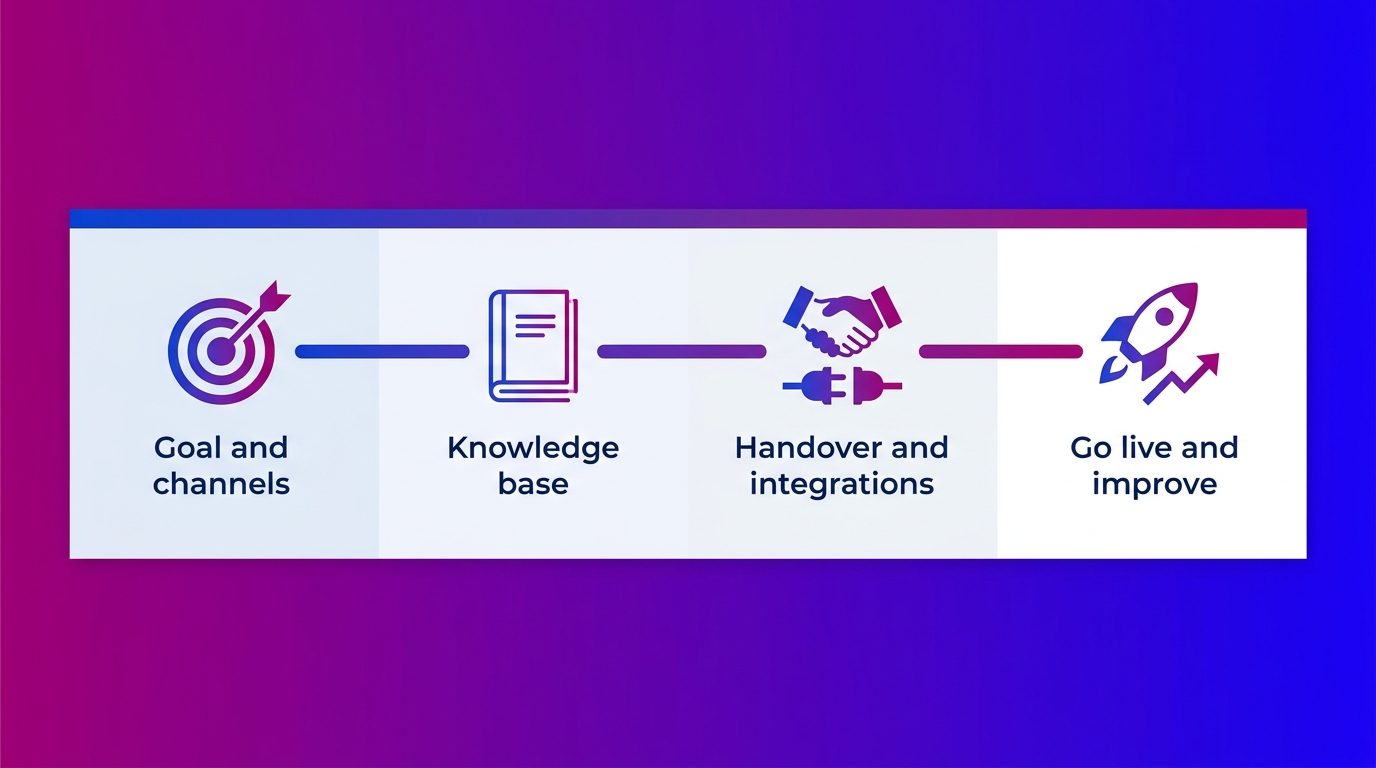
Steps 1 and 2: set the goal and choose the channels
Start with one concrete goal and one or two channels, not with the technology. What do you want the AI to deliver? More enquiries from your website, fewer repeat questions for your team, or better availability in the evening and at the weekend? The goal determines what the AI must be able to do and how you will later measure whether it works.
Then choose the channels where your customers already are. For most businesses that is the chat on the website, often supplemented with WhatsApp. Do not start with every channel at once. One channel that works well says more than four channels that half work.
Step 3: build the knowledge base
The knowledge base is the foundation of every implementation: the AI can only answer well on what is in it. Collect the questions customers really ask, from your inbox, chat history and phone notes, and the answers your team gives. Add product information, terms, opening hours and ways of working.
Also record what the AI needs to ask for a good enquiry. For a car dealer that might be the preferred model, a part-exchange car and the moment for a test drive. For a window company, the room, the dimensions and the requirements. That way an enquiry reaches your team complete.
Steps 4 and 5: arrange the handover and connect your systems
Agree in advance when a person takes over the conversation: for a question outside the knowledge base, for a complaint or when the customer asks for it. Also arrange what happens outside office hours. The AI announces the handover and passes on the whole conversation.
The law sets requirements too. If you serve customers in the EU, Article 50 of the EU AI Act requires people to be told when they are interacting with AI. Good practice adds that customers should always be able to reach a person. So build in that notice and that route to a member of staff from the start.
Then connect your systems, so enquiries land directly in your CRM, calendar or inbox. With integrations with your CRM and helpdesk, nobody has to retype details. An integration is useful, but not required to get started: without one, enquiries come in by email.
Steps 6 and 7: test, go live and improve
Test the AI with the questions customers really ask before you go live. Have colleagues try to make it get stuck: with odd phrasing, typos and questions that are just outside the knowledge base. That shows you where the knowledge base has gaps and whether the handover works.
After go-live the real work begins. Look every week at which questions go well, where the AI gets stuck and how often it hands over. Add to the knowledge base and adjust the setup. Which figures to track for that is covered in chatbot metrics.
Build it yourself or have it set up
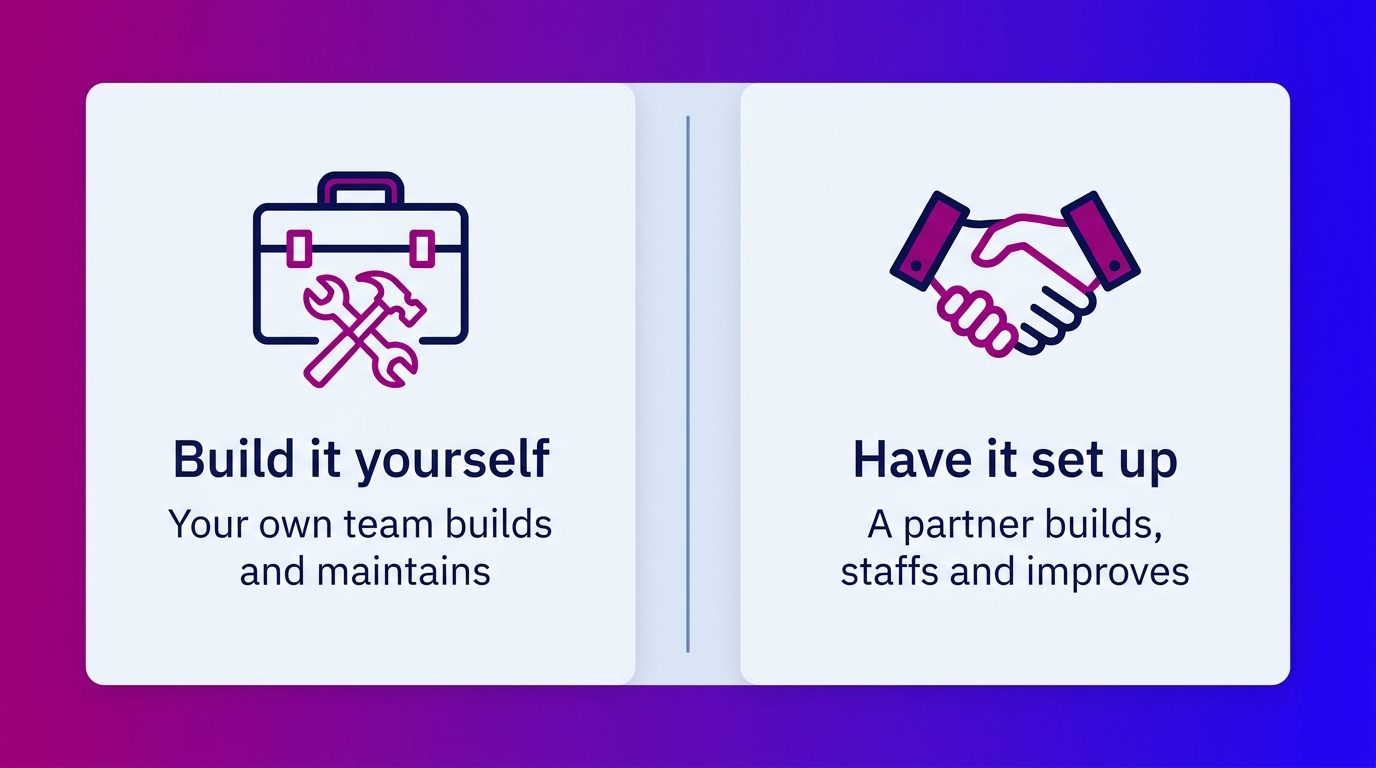
You can build conversational AI yourself with a software package or have it set up by a partner who does it for you. Building it yourself suits you if you have your own people to build the knowledge base, test the AI and maintain it on an ongoing basis. Having it set up suits you if you mainly want results, without your team turning it into a project of its own.
When making that choice, look above all at what happens after go-live. An AI that is not maintained slowly gets worse, because your range and your customers’ questions change. And an AI with no people behind it has nowhere to send customers with a difficult question.
How an implementation works at Bconnect
At Bconnect an implementation starts with a 30-minute consultation about your goal, your volume and your channels. You then receive one proposal with the approach, the expected costs and what is included.
During setup we build the knowledge base together with you: we gather the information from you instead of expecting you to supply everything yourself. We install the chat script, connect the channels and integrations and agree when a chat specialist or your own team takes over. After go-live you have a fixed point of contact who keeps improving the setup. If you want to have conversational AI implemented, that consultation is the first step. Which applications deliver the most is covered in AI in business.
From plan to an AI that works
Implementing conversational AI works best if you start small: one goal, one channel, a good knowledge base and a clear handover to your team. Test with real questions, go live and keep measuring and improving. That way the AI grows with your business instead of grinding to a halt after a few months.
Frequently asked questions about implementing conversational AI
How do I start implementing conversational AI?
Start with one concrete goal, such as more enquiries from your website or fewer repeat questions for your team. Choose one or two channels, build a knowledge base with the questions customers really ask and arrange the handover to your team.
How long does it take to implement conversational AI?
That depends on the amount of information, the number of channels and the connections to your systems. Most of the time goes into building the knowledge base and testing with real questions.
What do I need to get started?
A clear goal, information about your products and way of working, the questions customers often ask and agreements on who takes over the conversation. An integration with your CRM is useful, but not required.
Do I need to connect conversational AI to my CRM?
You do not have to, but it helps. With an integration, enquiries go straight into your CRM. Without one, they come in by email and you transfer them yourself.
Can I build conversational AI myself?
Yes, you can build it yourself with a software package. You will then need your own people to build the knowledge base, test it and maintain the AI on an ongoing basis.
What do I need to arrange for the EU AI Act?
If you serve customers in the EU, they must know they are talking to AI. Good practice also says there should always be an option for human contact. Build in that notice and the route to a member of staff from the start.
How do I know whether the implementation has succeeded?
Measure how many questions the AI handles on its own, how often it hands over, how satisfied customers are and how many enquiries it delivers. Compare those figures with the goal you set at the start.