Omnichannel means that a business uses several customer channels that are fully connected to each other. The aim is to give customers a consistent, seamless experience, whether they get in touch by email, chat, social media or in a physical shop.
So it is not about how many channels you have, but whether they know about each other. In practice, that is exactly where things often go wrong: a business adds WhatsApp next to its chat and its mailbox, but each channel has its own inbox, its own team and its own memory. Below you will read what omnichannel means, what it looks like in customer contact and what to watch out for when you get started.
What does omnichannel mean?
Omnichannel is an approach in which all of a company’s contact channels are connected, so the customer gets the same experience everywhere and can take the conversation from one channel to the next.
Where does omni come from? Omni comes from the Latin omnis, meaning “all” or “every”. Omnichannel literally means “all channels”: not as separate routes side by side, but as one whole.
The omnichannel meaning comes down to three things:
- One view of the customer. Whoever helps the customer can see what was discussed earlier on other channels.
- One tone and one answer. The customer gets the same information on chat as on WhatsApp or email.
- Free choice for the customer. The customer picks whichever channel is easiest at that moment, and switches without friction.
A business with five channels that work separately is therefore not omnichannel. A business with two channels that know each other’s conversations is.
Omnichannel communication: what it means in customer contact
Omnichannel communication is the way you talk to customers when all your channels are connected: every message lands in one overview, with the history attached, whether it arrives via the website, WhatsApp, Messenger or email.
For the customer, it feels like one continuous conversation. For your team, it means fewer repeat questions, because nobody has to search three systems and a colleague can take over a conversation without asking the customer everything again.
You notice the difference most with the second question. A customer who asked about a delivery time on your chat yesterday and sends “any news?” on WhatsApp today expects you to know what it is about. With separate channels you don’t. With omnichannel communication you do.
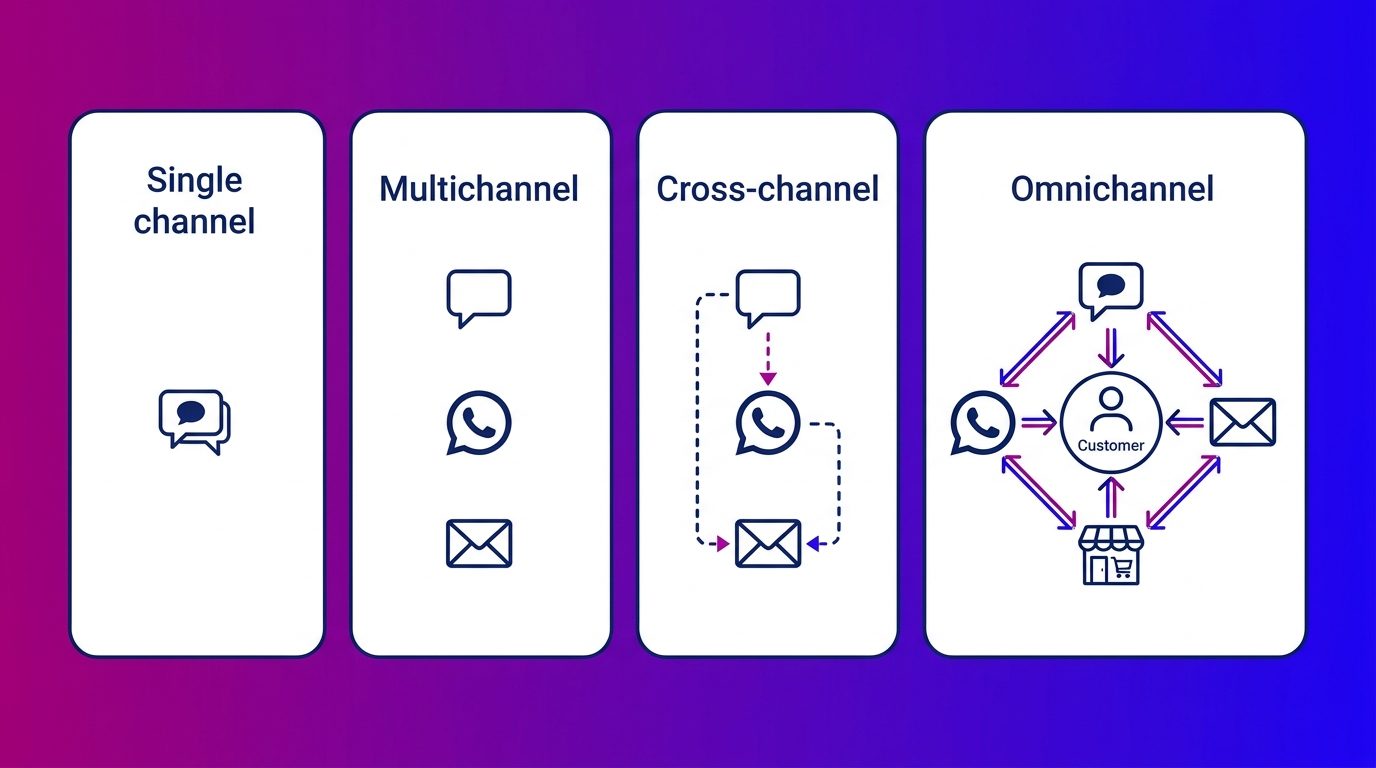
Omnichannel, multichannel and cross-channel at a glance
The difference with multichannel fits in one sentence. Multichannel: you use several channels, but they are separate. Omnichannel: all channels are integrated and share data. Cross-channel sits in between: channels are linked at fixed points, such as an ad that opens a WhatsApp conversation.
Multichannel is the step most businesses have already taken: opening more channels. Omnichannel is the step after that: making those channels work together. For a fuller comparison, read our article on multichannel vs omnichannel.
What an omnichannel customer experience delivers
An omnichannel customer experience is one in which the customer does not notice switching channels, because the business recognises them everywhere and picks up where the previous conversation left off.
Customers already switch channels all the time. In the UK, 28.3% of all retail sales were made online in December 2025, according to the Office for National Statistics, while the rest still happens in shops. And when Britons contact a business, YouGov found that 74% use email and 65% use the phone, with chat, apps and social media used alongside them. Hardly anyone sticks to a single route.
That pays off for businesses that get it right. A study published in Harvard Business Review of more than 46,000 shoppers found that only 7% shopped exclusively online and 20% exclusively in store. The rest used several channels, and those customers spent more and came back more often.
You also finally see the whole picture as a business. Which questions arrive on which channel, which question comes before a purchase, and where do customers drop out? With separate channels, those patterns stay hidden.
The omnichannel approach in practice: three situations
An omnichannel approach becomes concrete when you look at the moments a customer switches channels.
1. The customer moves from the website to WhatsApp. Someone asks a product question on your chat in the afternoon and gets an answer. In the evening they send a follow-up on WhatsApp. With a shared overview, whoever answers sees the earlier conversation and can carry on straight away.
2. The question arrives outside office hours. A visitor asks something at nine in the evening. An AI agent or an evening team answers and notes what the customer is looking for. The next morning, the sales team picks it up with full context instead of a bare contact form.
3. A question becomes an appointment. A customer researches on your chat, asks about availability on WhatsApp and then books an appointment. Because it is one conversation, the salesperson already knows what the customer wants when they meet.
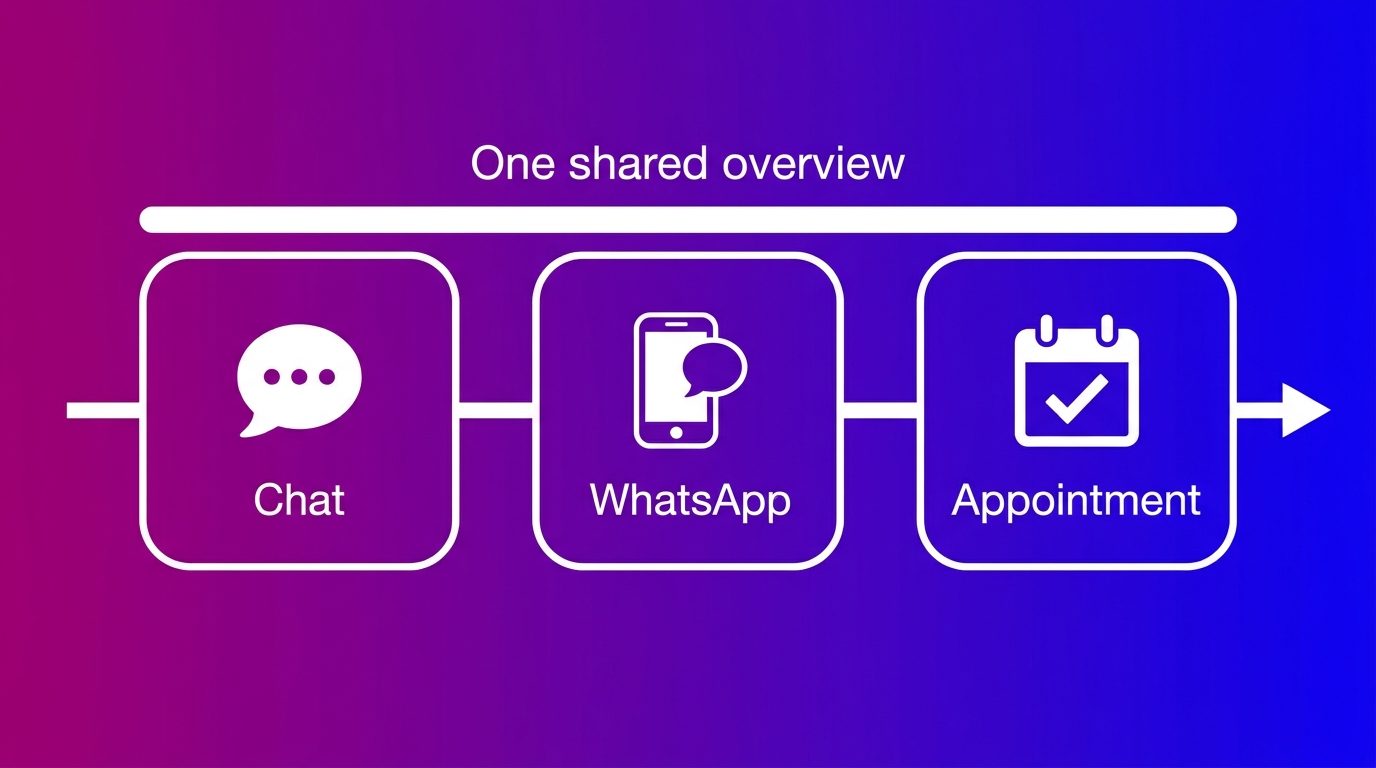
How customers switch channels in practice
At Bconnect we handle around 2.5 million conversations a year on behalf of businesses, via website chat, WhatsApp, Messenger, SMS and email. That shows us up close how customers move between channels, and where it goes wrong.
What we see again and again: customers switch channels far more often than businesses expect. A visitor who asks about a used car on a dealer’s website often sends a photo of their part-exchange car on WhatsApp later. At a kitchen showroom, the conversation starts on the chat and continues on WhatsApp as soon as drawings or measurements are shared.
Where it goes wrong is rarely the technology. It is the handover: a question that arrives on a channel nobody is watching, or a conversation that starts with one person and continues with a colleague who does not know the history. That is why all channels arrive in one inbox by default with us: website chat, WhatsApp, Messenger, SMS and email. Our chat specialists see the earlier messages and summarise what has already been discussed before asking anything new. When the AI hands a conversation over to a specialist or to the client’s own team, it says so and passes on the full context.
The WhatsApp 24-hour window
WhatsApp has its own rule that many businesses underestimate. After a customer’s last message, you have 24 hours to reply freely; after that you can only send a pre-approved template message. A question left on Friday evening can no longer simply be answered on Monday. If you work omnichannel, your follow-up has to take channel rules like this into account.
Where do you start with omnichannel?
Don’t start with more channels, start with the ones you already have. Map where customer questions arrive now, who answers them and whether those people can see each other’s conversations. That is usually where the biggest gain lies.
Then come the choices: which channels you actively offer, who answers when, which questions an AI agent can handle and how you arrange the handover to your sales or service team. How to tackle that step by step is covered in our article on omnichannel strategy. You will find businesses that already work this way in our omnichannel examples.
On the technical side, you need a system that brings all channels together in one inbox. That can be your own omnichannel software that your team uses, or a partner who handles the conversations for you.
Omnichannel is about the conversation, not the channels
The meaning of omnichannel fits in one sentence: the customer has one conversation with your business, whichever channel they choose. The number of channels is secondary. What counts is that every channel knows what was said on the others, and that the customer never has to start from scratch.
Businesses that get this right see it in faster answers and fewer missed questions, but above all in customers who feel recognised. Want to read more? See everything about omnichannel customer service in our knowledge centre.
Frequently asked questions about omnichannel
What is meant by omnichannel?
Omnichannel means that a business uses several customer channels that are fully connected. The customer gets the same experience everywhere and can switch channels without having to repeat their story.
What does omni stand for?
Omni comes from the Latin omnis and means “all” or “every”. Omnichannel therefore literally means “all channels”, connected into one whole.
What is omnichannel communication?
Omnichannel communication is customer contact in which every message, whatever the channel, lands in one overview with its history. Anyone helping the customer can carry on where the previous conversation stopped.
What is the difference between omnichannel and multichannel?
With multichannel, a business offers several channels that work separately. With omnichannel, those channels are connected, so conversations and customer data are shared across all of them.
Which channels are part of omnichannel?
Any channel customers use to contact you can be part of it: website chat, WhatsApp, Messenger, email, phone and the physical shop or showroom. What matters is not how many channels you have, but whether they are connected.
Is omnichannel only for large businesses?
No. Smaller teams benefit most from one overview, because the same people serve several channels. Two well-connected channels often deliver more than five separate ones.
What is an omnichannel customer experience?
An omnichannel customer experience is one in which the customer does not notice switching channels. They are recognised everywhere, get the same answer everywhere and never have to repeat themselves.