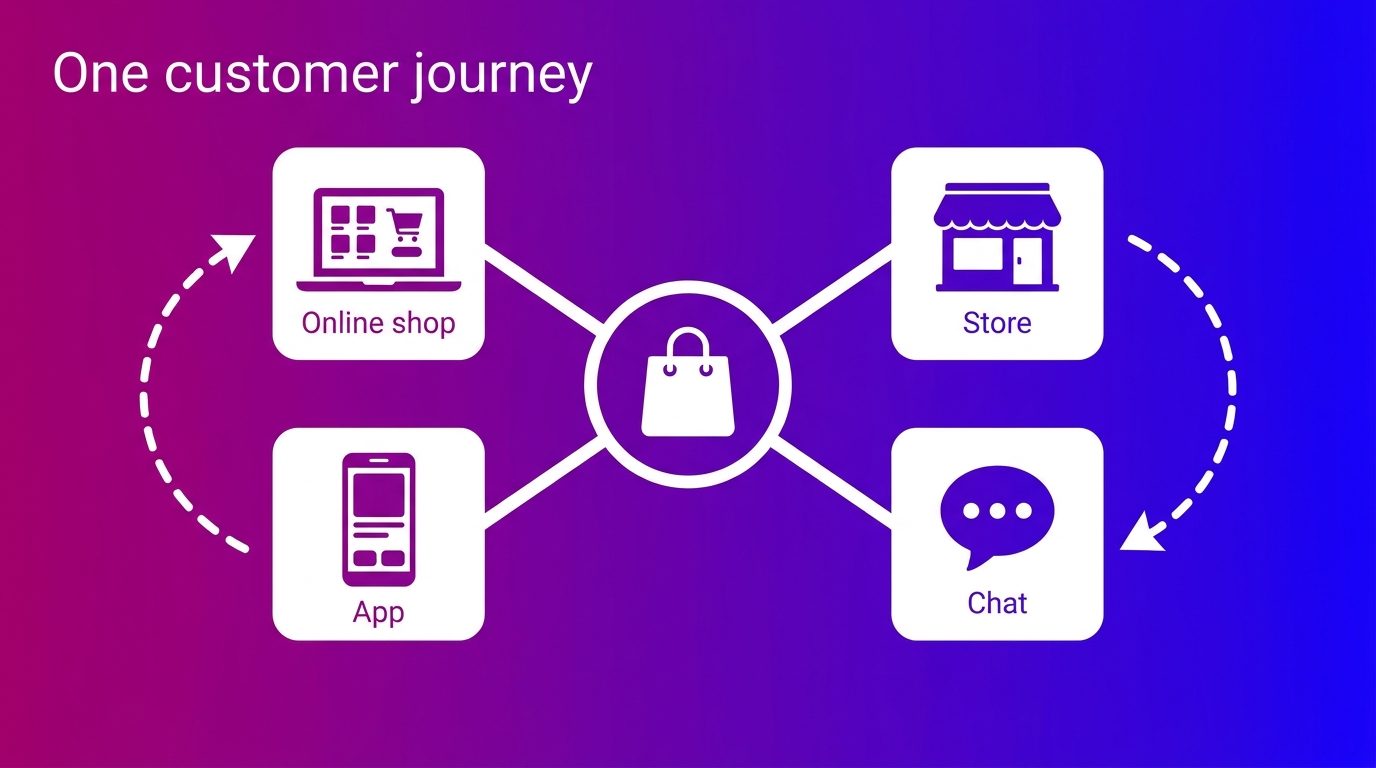
Omnichannel retail is an approach in which a retailer connects its sales and contact channels, such as the physical shop, the online shop, the app, social media and customer contact via chat or WhatsApp. A customer can start online, continue in store and finish via another channel, without losing information or their basket.
The difference with multichannel retail lies in the connection: with multichannel, the channels are separate; with omnichannel, they share customer data. Below you will read why retailers choose omnichannel, what it delivers and how to introduce it step by step.
What is omnichannel retail?
Omnichannel retail is a strategy in which a retailer integrates its channels so customers get a seamless, consistent shopping experience. It is about connecting online and offline, from shop and website to app, social media and chat, so customers can be served at every point of their journey.
A typical example: a customer looks up a product online, goes to the shop to see and try it, asks one last question on WhatsApp and then completes the purchase. At every point, they have access to the right information and a way to contact you, and whoever helps them can see what came before.
That is also the difference with multichannel retail. Being present on many channels is not enough; the channels have to know each other.
Why retailers choose omnichannel
Shoppers no longer buy along one line. In the UK, 28.3% of all retail sales were made online in December 2025, according to the Office for National Statistics. The other 70-odd per cent still goes through physical shops, and much of that is researched online first. Customers move between search engines, social media, the online shop and the store, and back again.
The main drivers for retailers:
- Changing customer expectations. Customers expect quick answers and the same service, whatever channel they use. If you don’t offer it, you come across as slow.
- Fragmented customer journeys. Research and purchase rarely happen in one place. Without an integrated approach you lose overview and relevance.
- Operational efficiency. A well-integrated system prevents staff from doing work twice or losing information between systems.
- Data-driven decisions. When all customer interactions come together in one place, you get a complete picture of your customer and can steer better on sales, satisfaction and retention.
This matters especially for retailers whose sales involve advice, such as kitchens, windows, bathrooms or furniture. A customer requests a quote online, gets advice on WhatsApp or chat and is then followed up by phone or email. With connected channels, no information or appointments get lost.
The benefits of omnichannel retail
1. A better customer experience
Customers can switch easily between online and offline, with more freedom of choice and a consistent experience. That makes satisfied customers who are more likely to come back and recommend you.
2. More customer loyalty
Customers feel valued when their preferences and history carry through every channel. The study of more than 46,000 shoppers in Harvard Business Review found that customers who used several channels spent more and returned more often.
3. Better customer insight
With omnichannel you collect information from every channel. That shows you which questions come before a purchase, which channel leads to a visit to the shop and where customers drop out, so you can tailor your marketing and service.
4. Higher conversion
Customers can continue their purchase on the channel that suits them best. That reduces friction and makes it easier to buy. A question answered quickly on the chat is often the last step before a visit or an order.
How to introduce omnichannel retail: a step-by-step plan
1. Start from the customer
Learn what your customers ask, where and when. Collect a few weeks of questions from the shop floor, chat, email and phone, and look at where customers switch channels.
2. Connect your channels
Invest in technology that links your channels. A CRM that brings customer data together, and one inbox for chat, WhatsApp, Messenger and email, so whoever helps the customer sees the full history.
3. Align your marketing
Make sure your campaigns and messages reinforce each other across channels, and that every response, whether to an ad or a newsletter, ends up somewhere it will be followed up. More on this in our article on omnichannel marketing.
4. Make the experience seamless
Treat the shop floor as part of the customer journey. Offer click and collect, flexible returns and online reservations, and make sure staff in the shop can see what a customer asked online.
5. Measure and optimise
Analyse customer data from every channel and use it to adjust your range, messages and channels. Keep developing: customer behaviour changes, and so should your approach. The steps are worked out further in our article on omnichannel strategy.
How we see omnichannel in retail and home and living
At Bconnect we handle customer contact for shops and brands in home and living, among others, via website chat, WhatsApp, Messenger and email. What we see there again and again: the customer researches online, asks a question on the chat and only then comes to the shop or showroom. Whoever catches that question well and passes the conversation, with its history, to the shop team turns a visitor into an appointment.
That comes down not to the channel itself, but to our chat specialists asking the right follow-up questions and booking the appointment straight away. How that works is explained on our pages about omnichannel customer contact and home and living.
Frequently asked questions about omnichannel retail
What is the difference between omnichannel and multichannel retail?
With multichannel retail, a business uses several sales and contact channels, such as an online shop, a physical shop and social media, but they work separately. Omnichannel retail connects those channels, so customer data, preferences and purchase history are available at every touchpoint.
Is omnichannel retail only for large retailers?
Not at all. Smaller retailers benefit too, especially when sales involve advice. You can start small, for example with chat and WhatsApp in one inbox, and expand step by step.
What is an example of omnichannel retail?
A customer looks up a sofa online, asks about delivery times on the chat, sees it in the shop and orders it later via WhatsApp, while every member of staff can see the earlier conversations.
How do I know if my business is ready for omnichannel?
Ask yourself whether you use several channels that aren’t connected, whether you lack insight into customer behaviour across channels and whether customers notice inconsistencies. If the answer to any of these is yes, omnichannel has a lot to offer.
What does click and collect have to do with omnichannel?
Click and collect is a typical cross-channel link between online and the shop. It becomes omnichannel when the shop also sees the customer’s questions and history, not just the order.