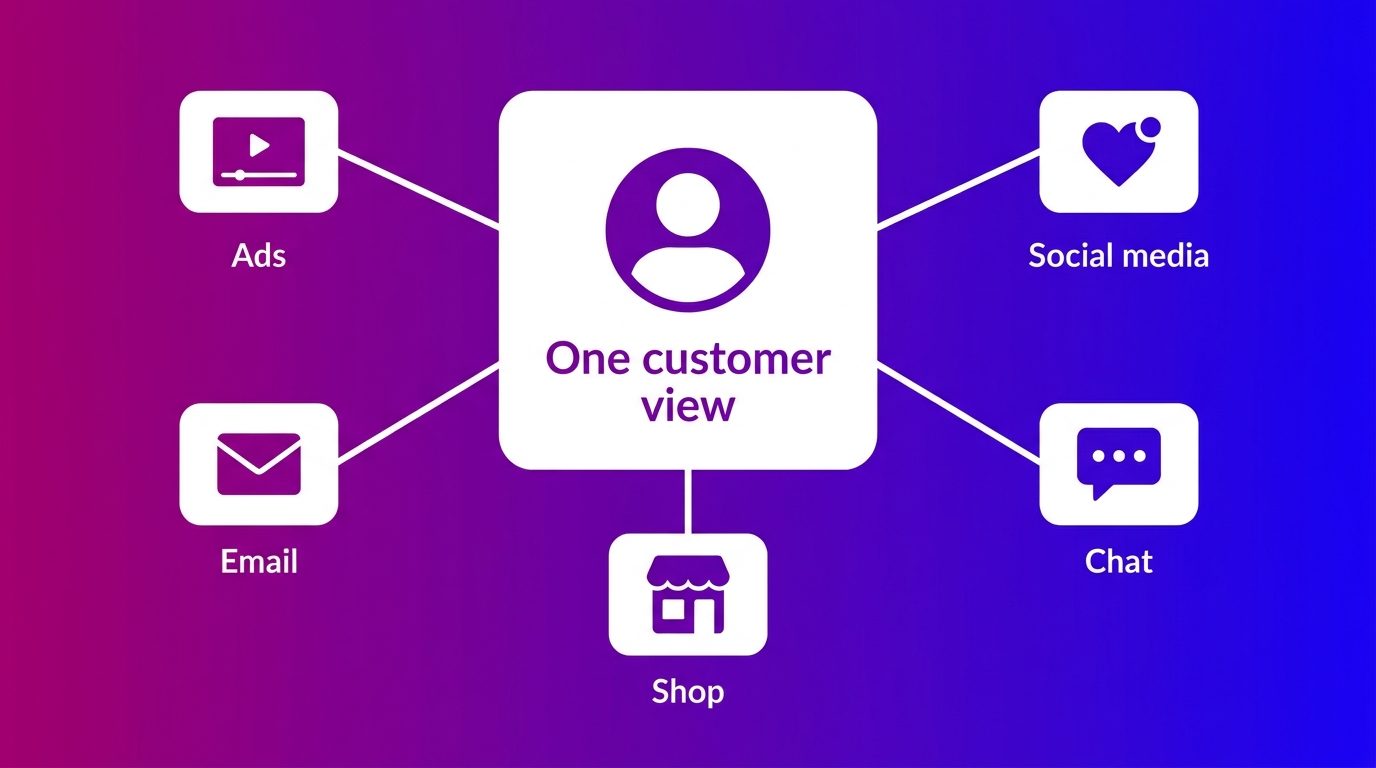
Omnichannel marketing is an approach in which you align all your marketing and contact channels, such as your website, email, social media, advertising, chat and the physical shop. A customer gets the same message everywhere and can continue their customer journey without interruption. The growth does not come from more channels, but from channels that reinforce each other.
In this article you will read how omnichannel marketing works, why it drives growth and how to approach it step by step.
What is omnichannel marketing?
Omnichannel marketing is an integrated approach in which a business aligns all its channels to offer a consistent and personal customer experience. Where each channel stands on its own in multichannel marketing, omnichannel is about integration: customers can switch between channels without repeating information or losing the thread.
The difference with separate campaigns lies in what happens after the click. Does the response to an ad end up in a conversation with context, or in a form that sits unanswered for days? The difference between the two approaches is covered in more detail in our article on multichannel vs omnichannel.
Why omnichannel marketing drives growth
Customers move between channels whether you plan for it or not. In the UK, 28.3% of retail sales were made online in December 2025, according to the ONS, and the rest still went through shops. Many people research on one channel and buy on another. In the study of more than 46,000 shoppers in Harvard Business Review, customers who used several channels spent more and came back more often than single-channel customers.
A well-run omnichannel approach has a direct effect:
- More relevant communication, based on what the customer has already done and asked on other channels.
- A stronger customer relationship through consistent messages and answers.
- Better availability, which leads to better service and higher conversion.
- Better collaboration between marketing, sales and service, because everyone works from the same information.
For businesses in automotive or retail, where customer contact is often spread across many channels, an omnichannel approach is the way to get a grip on the full customer journey.
The building blocks of omnichannel marketing
1. Integrate channels into one customer view
The foundation is connecting your customer channels: website, chat, WhatsApp, phone, email and social platforms. That creates a clear picture of each customer, so you can tailor your communication. A customer who asks a question on the chat and calls later is recognised straight away.
2. Use data for a personal experience
By combining data from several channels, you gain insight into behaviour, preferences and buying intent. That lets you send messages that genuinely match what the customer needs. AI helps by recognising patterns across channels, so you can respond faster to what customers expect. Keep within the rules: in the UK, marketing emails and texts to individuals generally need their specific consent, as the ICO explains.
3. Communicate consistently, whatever the channel
Whether a customer meets your brand on Instagram, in their inbox or in your showroom, it should always feel like the same experience. That means your tone of voice, offers and visual identity are aligned, and that the answer on WhatsApp matches the answer on the chat.
4. Make customer service part of marketing
Customers expect a quick, relevant response on every channel. By bringing your communication channels together in one inbox, your team works more efficiently and gives better service. The result: less frustration, faster handling and higher conversion.
5. Measure, optimise and grow
A well-integrated system gives you not only control but measurability. With cross-channel tracking you see which touchpoints contribute to conversion and where improvement is needed, so you can invest in the right channels.
Taking omnichannel marketing a step further
Have you already started with omnichannel and want to go further? Then deepen your approach in four areas.
- Map the full customer journey. Through which channels does a customer contact you before, during and after a purchase? Include offline touchpoints such as a showroom visit or a phone call. That is where friction and opportunities become visible.
- Decide based on data. Which communication works at which moment, which customers are ready for a next step and where do people drop out? A CRM, analytics and marketing automation help you combine the data.
- Test and learn. Run small experiments with message, timing and channel choice. AI can speed this up by predicting which combinations work best.
- Align your teams. Omnichannel success requires collaboration between marketing, sales and customer contact. Make sure everyone has access to the same customer information and follows clear processes.
How to translate this into a plan is covered in our article on omnichannel strategy.
Where marketing turns into a conversation
At Bconnect we see omnichannel marketing mainly at the moment a campaign turns into a conversation. Our clients use WhatsApp links in ads and emails and QR codes on printed material, and every response reaches our chat specialists in the same inbox as website chat and email.
That way, whoever answers knows which campaign someone came from and what was discussed before, and a qualified lead goes to the sales team with the full conversation. That is exactly where marketing becomes revenue: not at the click, but at the follow-up. How that follow-up works is explained on our page about omnichannel follow-up of campaigns. Want to know what a lead may cost you along the way? Read our article on cost per lead.
Growth through smart omnichannel marketing
Businesses that want to keep growing have to look beyond separate marketing actions. A strong omnichannel marketing strategy delivers more customer insight, a better experience and, ultimately, higher revenue. Connect your channels, use what you learn and follow up every response with context. More on the topic can be found in everything about omnichannel customer service.
Frequently asked questions about omnichannel marketing
What are the benefits of omnichannel marketing?
Omnichannel marketing gives a consistent brand experience across all channels, which increases customer satisfaction. It allows personalisation by combining data from several touchpoints, leading to more conversion, stronger customer loyalty and more efficient teams.
What is the difference between omnichannel and multichannel marketing?
With multichannel marketing, a business uses several channels that are often not connected. With omnichannel marketing, those channels are fully integrated, so the customer has a seamless, consistent experience whichever channel they use.
How do I apply omnichannel marketing in my organisation?
Start by mapping the customer journey. Then bring your communication channels, such as chat, email, WhatsApp and social media, together in one environment. Use customer data for relevant messages and make sure every response is followed up with context.
Which channels belong in omnichannel marketing?
Every channel where customers meet your brand: website, email, social media, advertising, chat, WhatsApp, phone and the physical shop or showroom. What matters is that they are connected, not how many there are.
How do you measure omnichannel marketing?
Look at which touchpoints contribute to conversion, how quickly responses are followed up and how many conversations lead to an appointment or sale. Cross-channel tracking shows the route customers take.