Omnichannel management is setting up, running and improving all of a business’s customer channels as one whole, so customers get the same experience everywhere and can switch channels without starting again. Where an omnichannel strategy decides what you want to achieve, management is about day-to-day execution: who staffs which channel, which agreements apply and how you steer on results.
Many businesses already have the channels: a chat on the website, WhatsApp, email, social media. What is missing is someone who manages them as one system. That is what this article is about.
What is omnichannel management?
Omnichannel management means you don’t manage channels per department or per tool, but from one view of the customer. The essence is that every channel has the same information, follows the same agreements and passes conversations on to the others.
The idea grew out of research into multichannel customer management. Researchers including Scott Neslin of Dartmouth and Peter Verhoef of the University of Groningen described it as the design, deployment, coordination and evaluation of the channels through which a business and its customers interact. Omnichannel management adds one requirement: those channels must be connected.
The difference with omnichannel as a concept is small but important. What omnichannel means describes how it should look for the customer; omnichannel management describes how you sustain it as an organisation.
Why you need omnichannel management
Without management, channels grow apart. Each channel gets its own owner, its own response time and its own answers. The result is what often happens in practice: a customer gets a different answer on the chat than by email, or a WhatsApp message waits a day because nobody feels responsible.
Omnichannel management prevents that. The benefits are concrete:
- One view of the customer. Whoever helps the customer sees the history, whatever the channel.
- Equal quality on every channel. The same information, the same tone, the same response time.
- Less duplicate work. Questions are not picked up by two people at once.
- Steering on results. You see which channel leads to appointments or sales and can adjust staffing accordingly.
Omnichannel management is therefore not an extra layer on top of customer contact, but the way you organise customer contact as soon as you offer more than one channel. The difference with managing separate channels is explained in our article on multichannel vs omnichannel.
How to set up omnichannel management
Omnichannel management starts with agreements and only then with technology. Five parts make the difference.
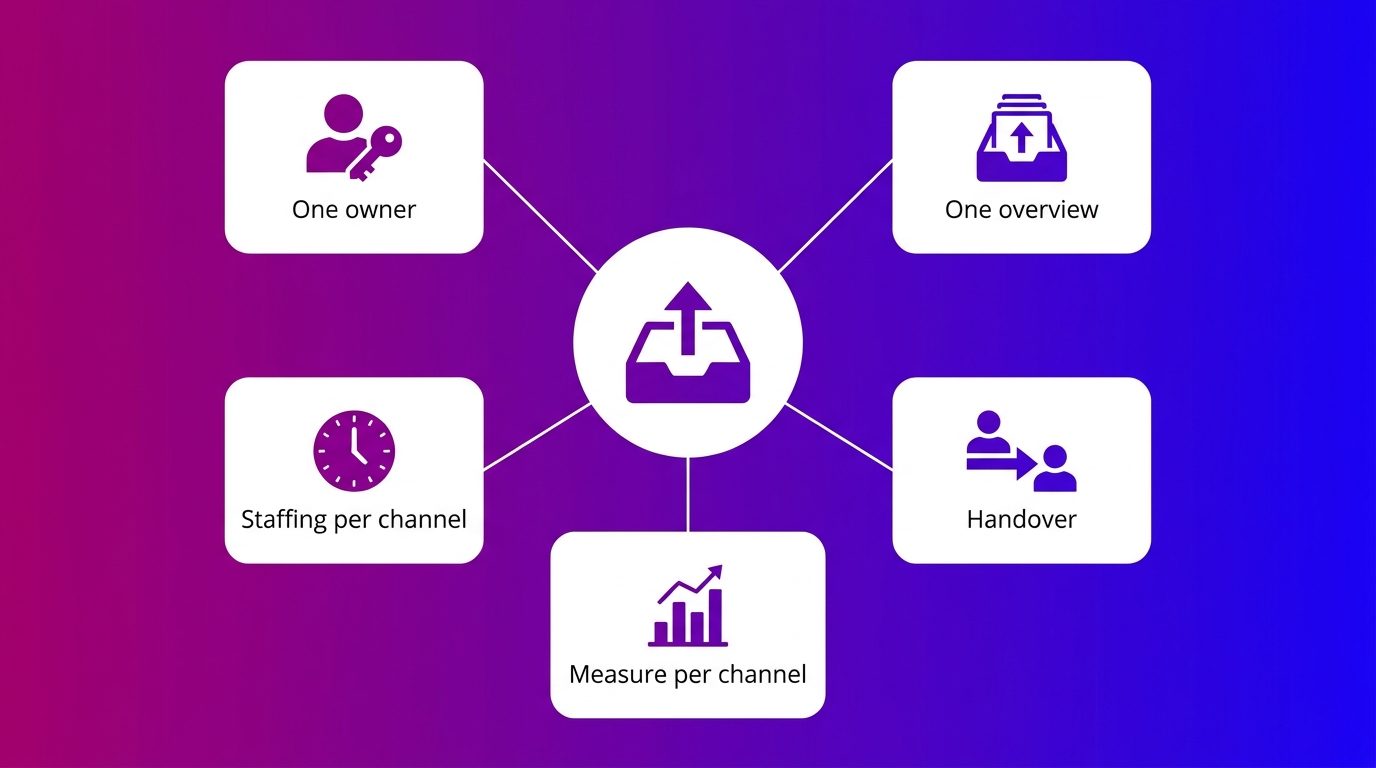
1. Appoint one owner for all channels
As long as marketing runs the social channels, service runs email and sales runs the chat, nobody sees the whole conversation. Make one person or team responsible for all customer channels together.
2. Bring all conversations into one overview
Make sure every message arrives in the same inbox, with its history. Without that overview, every other agreement stays on paper.
3. Arrange staffing per channel and per time of day
Record who answers which channel, at what times, and what happens in the evening and at weekends. A channel you offer but don’t staff damages trust more than a channel you don’t offer at all.
4. Agree how conversations are handed over
Decide when a question goes to sales, service or a specialist, and with what information. A short summary prevents the customer from having to tell their story again.
5. Measure per channel and adjust
Look at response time, the share of conversations that lead to an appointment or purchase and where customers drop out. Take channel rules into account too: WhatsApp, for example, lets you reply freely for 24 hours after the customer’s last message, and after that only with an approved template. If you don’t watch that window, you lose conversations.
How to turn these parts into a plan is covered in our article on omnichannel strategy.
How we set up omnichannel management
At Bconnect we manage customer contact for businesses via website chat, WhatsApp, Messenger, SMS and email, and handle the conversations ourselves with chat specialists and AI. Omnichannel management is therefore not theory for us, but the daily practice of our teams.
What we see again and again: the bottleneck is rarely the technology, but ownership. Businesses have three channels and three people responsible, and nobody watching the handover between them. That is why we start with one overview and fixed agreements: which questions the AI handles on its own, when a chat specialist takes over and how a qualified conversation goes to the sales team with its transcript.
For businesses that don’t want to organise this themselves, we take over the management, including staffing from 08:00 to 23:30 and AI outside those hours. How that works is explained on our page about outsourcing customer contact across all channels. And because the handover only pays off if the follow-up is fast, it is worth reading our article on lead follow-up as well.
Omnichannel management in short
Omnichannel management turns separate channels into one system: one owner, one overview, fixed agreements on staffing and handover, and steering on what each channel delivers. The technology makes it possible, but the agreements make the difference.
Frequently asked questions about omnichannel management
What is omnichannel management?
Omnichannel management is setting up, running and improving all customer channels as one whole, so customers get the same experience everywhere and can switch channels without starting again.
What is the difference between omnichannel management and an omnichannel strategy?
An omnichannel strategy decides which channels you use and what you want to achieve. Omnichannel management is about day-to-day execution: staffing, agreements, handover and adjusting.
Who is responsible for omnichannel management?
Ideally one person or team that manages all customer channels together. If each channel has its own owner, nobody sees the full conversation with the customer.
Which tools do you need for omnichannel management?
At least a system that brings all channels into one inbox, with the history per customer. A link with your CRM also helps, so conversations and leads are in one place.
How do you measure whether omnichannel management works?
Measure per channel the response time, the share of conversations that lead to an appointment or purchase and where customers drop out. Pay particular attention to what happens when customers switch channels.
Can you outsource omnichannel management?
Yes. You can place the management and staffing of your channels with a specialist partner, while your own team follows up the leads and customers.