Generative AI makes something; agentic AI does something. That, in one sentence, is the difference between agentic AI and generative AI. Generative AI writes a text, a summary or an answer. Agentic AI is given a goal and takes the steps to reach it, such as booking an appointment or passing on an enquiry.
In customer contact you rarely come across one without the other. In this article you see what each of them does, how they work together in one conversation and when generative AI is enough.
Agentic AI vs generative AI: what is the difference?
Generative AI produces content; agentic AI produces a completed task. With generative AI, a person decides what happens with the output. With agentic AI, the AI decides on the next step itself, within the limits you set.
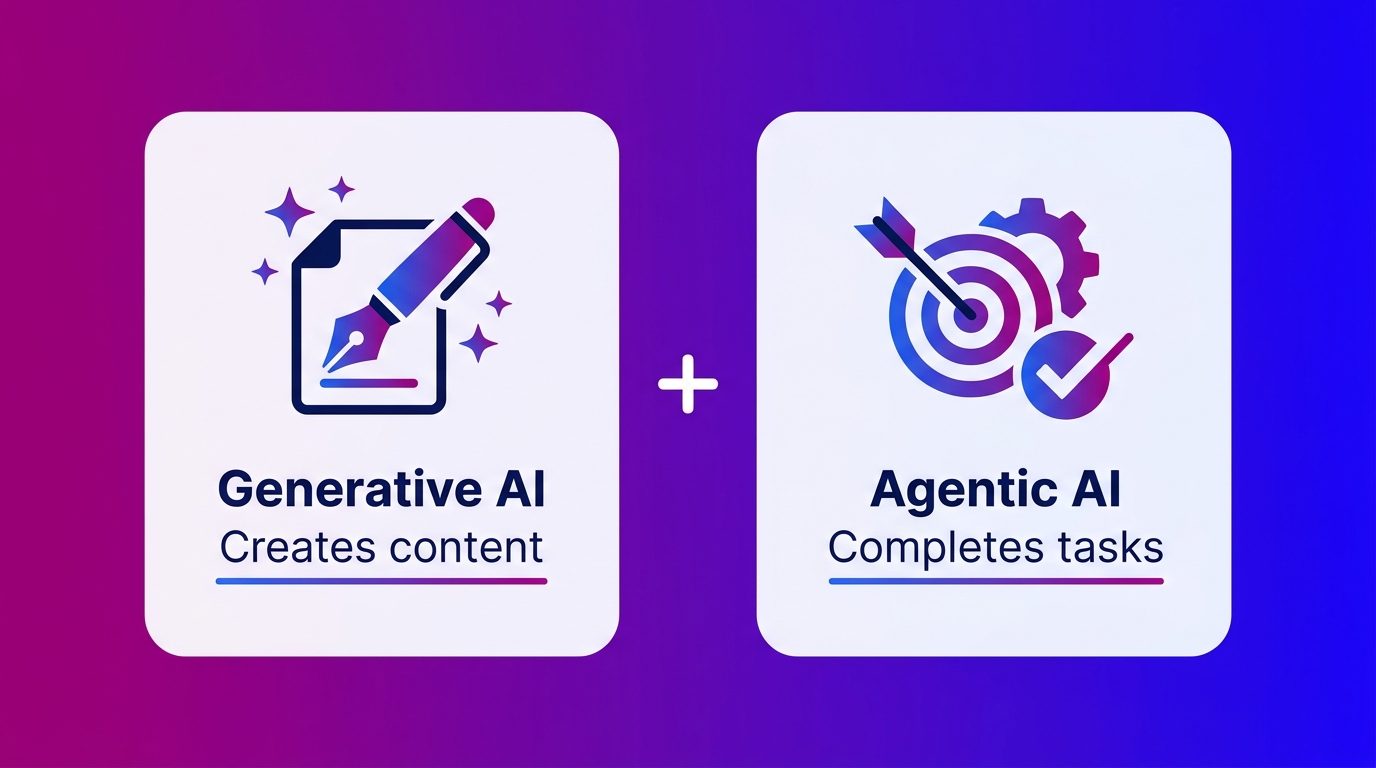
So it is not a choice between two competing technologies. Agentic AI usually builds on generative AI, as you will see below.
What is generative AI?
Generative AI is AI that creates new content based on an instruction. It can write texts, summarise information or create images. Well-known examples are ChatGPT and similar language models.
In customer contact, you mainly see generative AI in three places:
- Suggested replies. The AI suggests an answer to a customer question, and a colleague edits or sends it.
- Summaries. A chat conversation is summarised so the sales team can see at a glance what the customer wants.
- Texts. Think of a follow-up email after a test drive request or a rewritten product description.
Generative AI does not take decisions in your process. Whether the answer is sent and what happens next is decided by a person.
What is agentic AI?
Agentic AI is AI that pursues a goal independently by taking several steps and carrying out actions. It works with a plan, uses tools such as a calendar or CRM, and decides at each moment what the next step is.
The practical form of agentic AI is called an AI agent. What such an agent is and how it works is covered in the article on what an AI agent is. In customer contact you see two main types: an AI sales agent that qualifies new enquiries, and an AI service agent that helps existing customers.
The difference with an ordinary chatbot is similar: a chatbot answers, an agent completes. That distinction is set out in the difference between an AI agent and a chatbot.
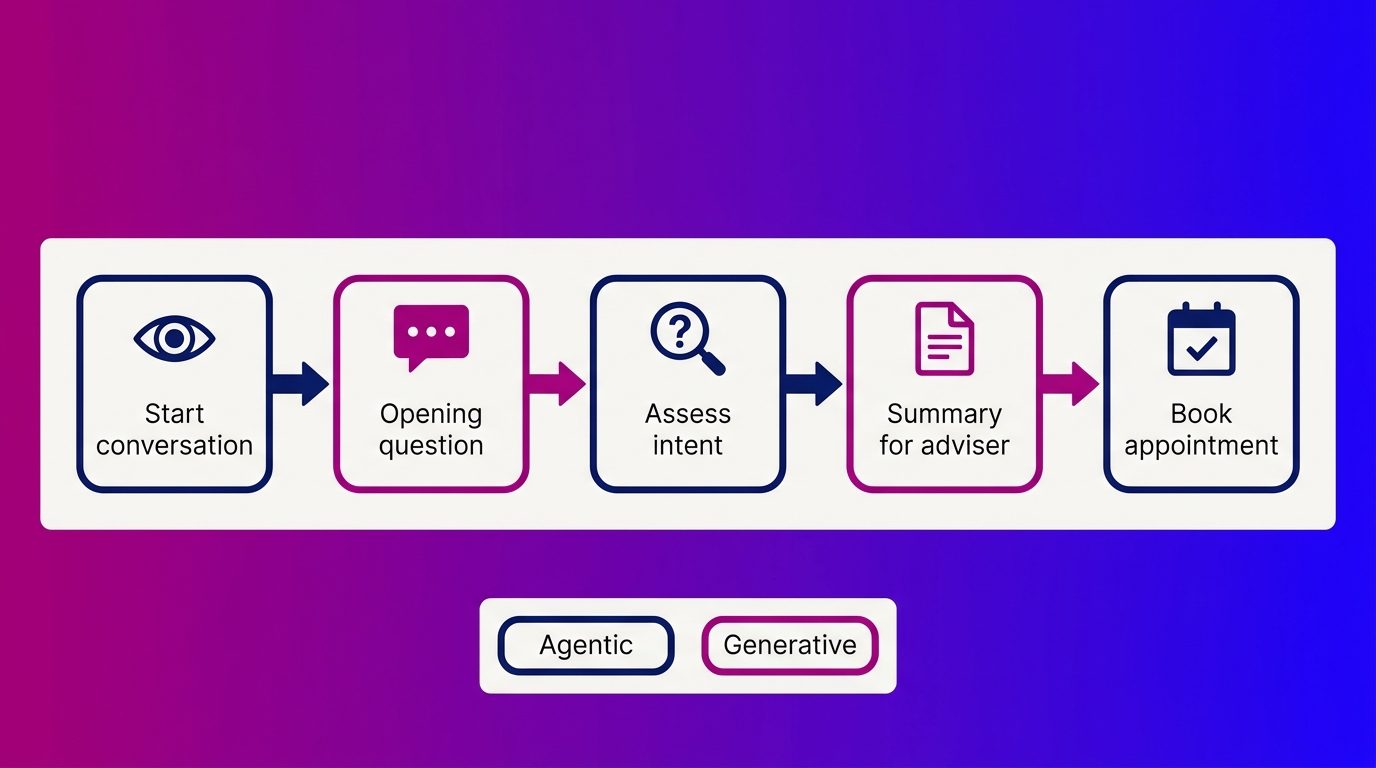
How agentic and generative AI work together in one conversation
In a well-designed conversation, the agentic layer decides what happens and the generative layer provides the words. In its guide to AI agents, Anthropic describes a language model with access to information, tools and memory as the basic building block of such systems. The generative model is literally inside it.
Take a visitor to a window company who has spent a few minutes looking at uPVC windows:
- Agentic: the AI notices the interest and decides to start a conversation.
- Generative: the AI phrases an opening question that matches the page, for example about the type of home.
- Agentic: based on the answers, the AI assesses whether there is real buying intent.
- Generative: the AI summarises the wishes in a short note for the adviser.
- Agentic: the AI books a measuring appointment in the calendar and sends a confirmation.
For the visitor, it feels like one conversation. Under the bonnet, the two layers keep taking turns.
When is generative AI enough?
Generative AI is enough if a person keeps taking the decisions and you mainly want to write, summarise or reply faster. You need agentic AI as soon as tasks have to be completed independently.
Generative AI fits if:
- your team spends a lot of time typing, searching and summarising;
- every decision needs to be taken by a person;
- you want to start small with AI, without integrations with your systems.
Agentic AI fits if:
- the same tasks keep coming back, such as appointments, enquiries or status questions;
- those tasks are currently retyped or scheduled by hand;
- you want to be available without every conversation passing through a colleague.
If you recognise the second list, you probably want to use agentic AI in your business processes, for example for follow-up or recurring customer questions. How to approach that is covered in implementing AI agents.
Generative or agentic: how it shows in our three models
At Bconnect you can see the difference between generative and agentic AI directly in the three ways we run conversations. The split between person and AI determines which layer does the work.
With Operator Assisted AI, one of our chat specialists leads the conversation. Generative AI supports in real time with information and suggested replies, but the specialist decides. Clients often choose this model for bespoke work and valuable sales opportunities.
With AI First + Human Handoff, the AI leads the conversation itself and acts agentically: asking questions, qualifying, passing on. If the AI cannot resolve something, a specialist or the client’s own team takes over, announced and with the full context. With AI Only, the AI works fully independently, for predictable tasks such as an appointment confirmation or a status question.
Generative and agentic AI are therefore not rivals, but two layers of the same system. Generative AI makes a conversation sound natural; agentic AI makes sure something is arranged after it. The right balance depends on how much trust and follow-up questioning a conversation needs. You will find more on the whole topic under AI agents.
Frequently asked questions about agentic AI and generative AI
Is agentic AI the same as an AI agent?
Almost. Agentic AI is the umbrella term for AI that pursues goals independently and carries out actions. An AI agent is the concrete application of it, for example in the chat on your website or in WhatsApp.
Is agentic AI always better than generative AI?
No. They do different things. If you only want to write replies faster or summarise conversations, generative AI is enough. If tasks need to be completed independently, such as booking appointments, you need agentic AI.
Does agentic AI need generative AI?
In customer contact, almost always. The agentic layer decides which step comes next; the generative layer phrases the text for the customer. Without generative AI, agentic AI can only work with fixed buttons and forms.
Is an AI chatbot generative or agentic?
That depends on what it does. A chatbot that only writes answers based on a knowledge base is generative. As soon as it carries out tasks itself, such as booking appointments or passing on enquiries, it works agentically.
Is ChatGPT generative or agentic AI?
At its core, ChatGPT is generative AI: it creates text based on your question. Features have been added that let it search or carry out tasks itself. In business customer contact, such a language model is usually used as part of an agent connected to your own systems.
What do you need to get started with agentic AI?
A clear process with fixed steps, access to the systems in which the AI needs to act, and agreements about when a person takes over. Start with one task that comes up often, such as appointment confirmations or test drive requests.
What does agentic AI change for your sales or service team?
Your team spends less time on routine work and more on conversations that really need attention. Salespeople receive complete enquiries, and service staff have more time for exceptions and personal questions.