A quarter past eight in the morning. A customer wants to know whether his car will be ready today, because he needs it tomorrow. He calls, and ends up in the queue behind the customers standing at the service desk.
The question itself is small, and that is exactly the problem. Service questions are rarely complicated, but they are time-sensitive and predictable. That makes them well suited to automation. Automate service bookings and after-sales, and you take pressure off the phone and keep time for the customer who really needs an explanation.
What automating after-sales at a dealership means
Automating after-sales means that recurring questions from existing customers, such as status questions, booking requests and MOT reminders, are answered or prepared automatically, while exceptions go to a member of staff with the context.
The volume is on the service side. Someone buys a car once every few years, but then needs servicing every year, an MOT and the occasional fault. Yet attention usually goes to live chat for car dealers on the sales side.
In practice an AI Service Agent handles the predictable part: collecting or booking appointments, answering status questions and sending reminders. A chat specialist or your own service team takes over where a question calls for judgement or a commitment. It is the same approach you use to take recurring questions off your hands for more return from your customer contact.
The service questions that come in every day
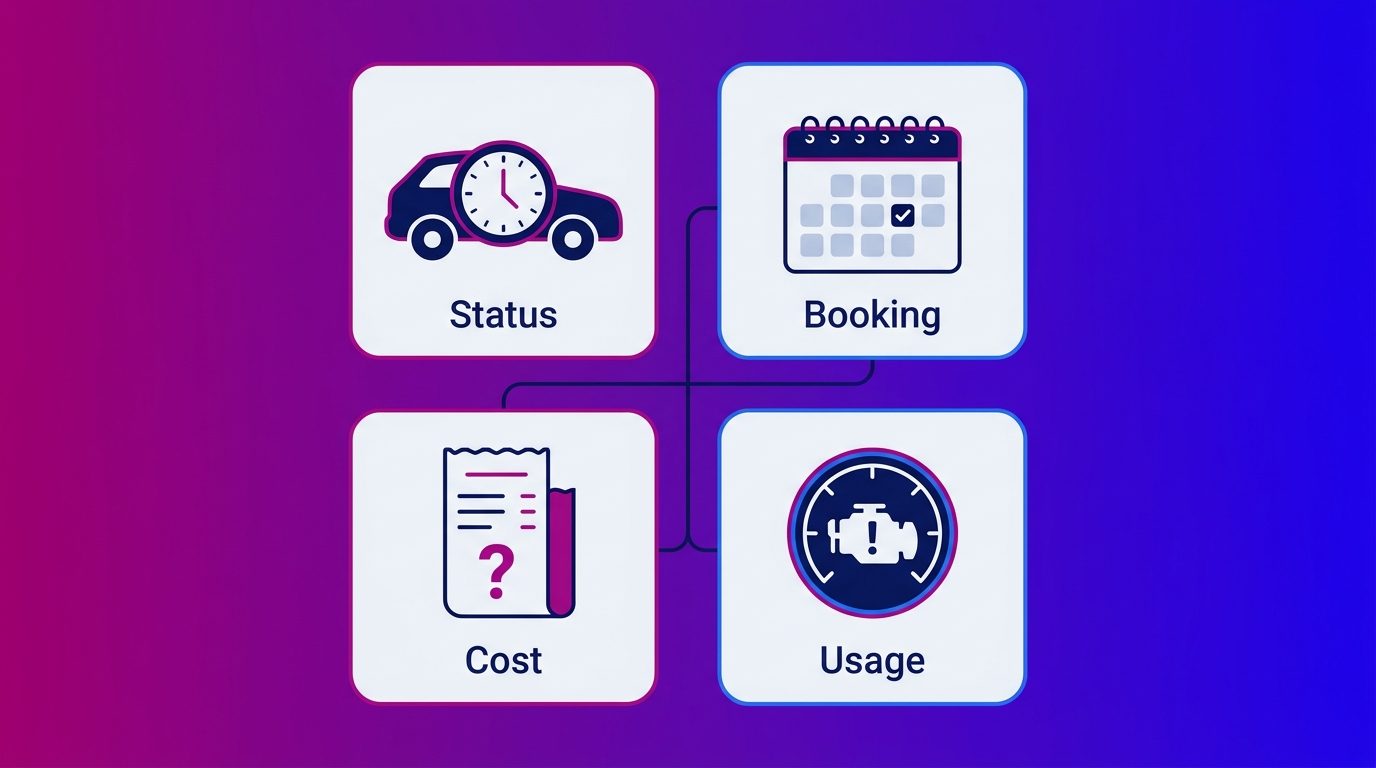
Service questions are remarkably predictable. They fall into four groups, and each group needs a different answer.
Status questions
“Is my car ready?” is the most common service question. Alongside it: how much longer will it take, and can I collect it this evening? These questions need no expertise, only access to information that is already known internally. Answer them quickly and you prevent three calls from the same customer.
Booking and MOT questions
“When can I come in?” and “can I book an appointment?” come up most often. They often go together with the question of when the MOT is due. These are exactly the questions that suit a service booking via chat.
Cost and warranty questions
“What will the repair cost?” and “is this covered by the warranty?” are the questions with the most emotion in them. Here it is not about speed, but about clarity. Be clear about the warranty, including what it does not cover.
Usage questions
A light comes on and the customer does not know what it means. Or he is looking for how to set something up. These are not fault reports, but questions from someone who does not fully understand his own car. Recurring usage questions are also a signal: if people keep asking for the manual, it is not easy enough to find on your website.
Automating service bookings: from question to schedule
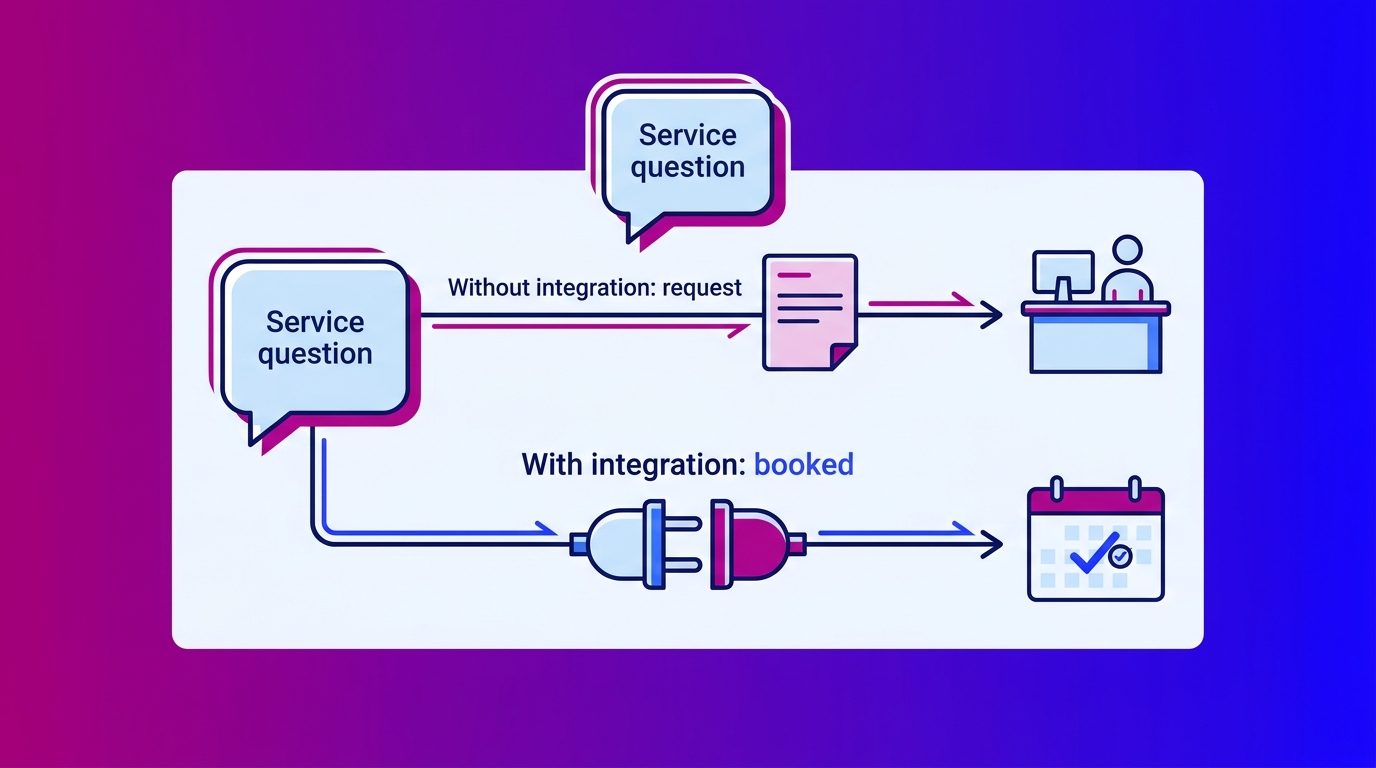
Automating a service booking can happen at two levels: collecting and passing on the request automatically, or putting the appointment straight into the schedule.
Without an integration: a complete request
Without an integration, the chat collects what the workshop needs: registration, the type of service or the problem, and the customer’s preferred times. That request goes to the service department, which confirms the appointment. There is an extra step, but the service adviser does not have to ask for anything.
With an integration: straight into the workshop planner
With an integration with your workshop planner or DMS, the chat sees what capacity there is and books the appointment straight in. Integrations work via API, webhooks, Zapier or custom work. It is useful, but not required to start.
Cost questions become a workshop request
With “what will the repair cost?” the chat does not give a price. It asks what it is about and turns it into a request for the workshop, or passes the conversation straight to a member of staff. The transcript goes with it, so the service adviser can read exactly what the customer asked.
MOT reminders that stay within the rules
An MOT reminder is the most underused opportunity in after-sales. A message such as “your MOT is due soon, shall we book a time?” arrives at exactly the right moment.
In Great Britain you can get an MOT up to a month (minus a day) before it runs out and keep the same renewal date, according to GOV.UK. A reminder from the dealership in that period is therefore a service, not advertising.
On WhatsApp, rules do apply. A reminder is a message you start, so you need an approved message template and the customer must have given consent. How those rules work is covered in WhatsApp for car dealers. If the customer replies to the reminder, you complete the booking in the same conversation.
Why online customer service matters most on the service side
The service department does not have a capacity problem, but a timing problem. The customer can usually only get in touch outside his own working hours, and then the service department has just closed. Or he calls in the morning, and the service adviser is at the desk.
During the morning drop-off, the customer at the desk always wins over the ringing phone, and rightly so. That makes your availability lowest at the moment demand is highest. You do not solve that by working harder, but by catching the predictable questions somewhere else.
Online customer service via chat and WhatsApp is the simplest way to offer more flexible hours. Which questions you leave to AI for car dealers and which you do not is covered in a separate article.
A photo instead of an explanation
A customer who sees a warning light usually cannot say which light it is. On the phone that becomes a guessing game. Via WhatsApp or chat he sends a photo.
What happens next is important to state honestly. The chat does not make a diagnosis. It sees what it is about and passes the photo to the workshop, so a technician can look at it. The customer does not have to describe what he cannot name, and the workshop knows roughly what it is about in advance.
What we see in service conversations for car dealers
In the service conversations we handle at Bconnect for car dealers, the same questions keep coming back.
Most questions are about scheduling. “When can I come in?” and “can I book an appointment?” are by far the most common. Those are questions AI can collect straight away, and with an integration also book.
Cost questions go to the workshop. To “what will the repair cost?” we do not give a price. We turn it into a request for the workshop or pass the conversation to a member of staff, with the context. That way the customer does not arrive at the desk with the wrong expectation.
The hours outside the workshop count. Our chat specialists are available seven days a week from early morning to late evening, and AI handles the predictable questions outside those hours too. A booking request from Sunday evening is ready on Monday morning instead of sitting in voicemail.
What automation in after-sales does not solve
Honest boundaries are more useful than another benefit. Bconnect handles chat, WhatsApp, Messenger, SMS and email, but not phone calls.
There is no remote technical diagnosis, and no quotes are prepared or prices agreed. A repair proposal remains your service adviser’s work. Complaints and warranty discussions also belong with a person who can deviate from the script and make a commitment.
What automation does do is remove the repetitive questions. Status updates, booking requests, MOT moments and usage questions eat up a service adviser’s day. Take them off the phone and there is time left for the conversation that really counts. That is how customer contact for dealers and importers works in sales and service.
Service is where the customer relationship is extended
You sell a car once. You keep a customer at every service, every MOT and every light that comes on. Being available at the right moment is the simplest step you can take.
Start with the questions that are currently left lying: when can I come in, is my car ready, when is the MOT due. Automate those first and keep people for the rest. How this fits with lead follow-up across dealer groups and the rest of live chat for car dealers is covered in this category.
Frequently asked questions about automating service bookings and after-sales
What does automating after-sales mean for a dealership?
It means recurring questions from existing customers, such as status questions, booking requests and MOT reminders, are answered or prepared automatically. Questions about costs, warranty or complaints go to a member of staff with the context.
Can a chat book a service appointment?
Yes, if there is an integration with your workshop planner or DMS, because otherwise available capacity is not visible. Without one, the chat collects registration, problem and preferred times and passes the request to the service department, which confirms the appointment.
Can you send an MOT reminder via WhatsApp?
Yes, but not just like that. A reminder is a message you start, so you need an approved message template and the customer must have agreed to receive messages from you.
Which service questions can AI handle itself?
Questions with a fixed answer or a fixed step: opening hours, the status of a repair, when someone can come in, collecting a booking request and sending reminders. With costs, warranty or complaints, a member of staff takes over.
Does the chat give a price for a repair?
No. With a cost question, the chat asks what it is about and turns it into a request for the workshop, or passes the conversation to a member of staff. Preparing a repair proposal remains the service adviser’s job.
Does the chat diagnose a fault?
No. The chat sees what the question is about and passes a photo or description to the workshop. The technical assessment stays with a technician.