Motivational interviewing aims to set behaviour change in motion in other people, for example prompting a customer to take action. With this style of conversation you look closely at the way you hold conversations with your customers. It plays an important role in both face-to-face and digital customer contact. How can you make your conversations motivating? In this article we explain what motivational interviewing is, where it comes from and how to apply it in customer conversations via chat.
What is motivational interviewing?
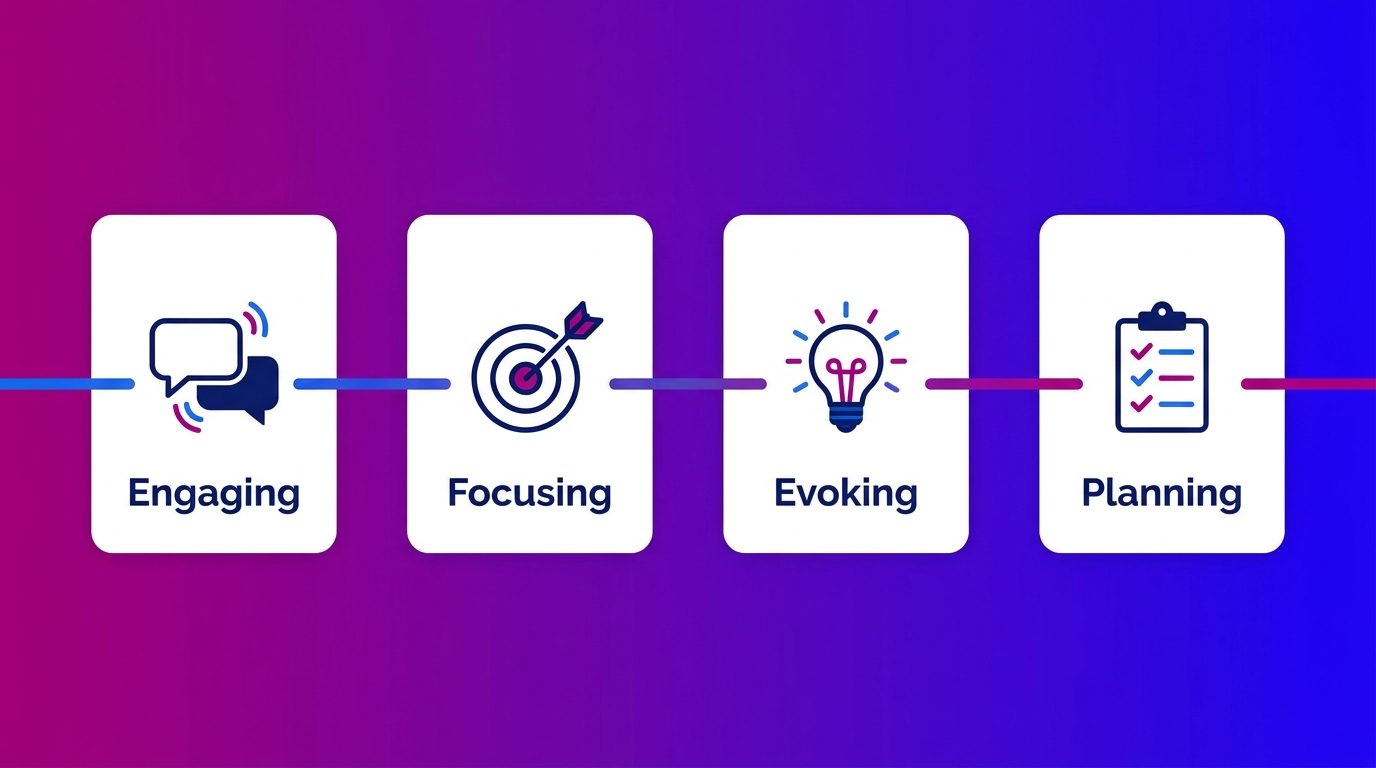
Motivational interviewing is a conversation style with which you draw out and strengthen a customer’s own motivation and readiness to change. The method was developed by the psychologists William Miller and Stephen Rollnick, and as the UK-based Psychology Tools summarises it, it rests on a spirit of partnership and acceptance, and on four processes: engaging, focusing, evoking and planning. The goal is to change the customer’s behaviour during the conversation and to build a relationship with that person. In the conversation you actively invite your customer to explore together where their own motivation lies.
The technique can be applied in customer conversations, such as phone or chat conversations. How do you make sure that previous customer books another appointment, or win over that hesitant lead? That is what motivational interviewing is about. Instead of trying to convince a customer, which is often counterproductive, you put your energy into evoking change.
During the conversation you look for the customer’s own reasons, wishes and possibilities for wanting and being able to change. You are, as it were, a guide who sets realisation and awareness in motion. Your customer starts thinking, and that is how you reach different goals, such as winning a lead, receiving contact details or securing a purchase via the website.
An example of motivational interviewing in chat
You can apply motivational interviewing during a chat conversation with a website visitor. In the first phase the customer is often still searching and has questions about a product or service. We often see website visitors start a chat because they want more information or an answer to their questions. In this orientation phase the visitor does want to change, but there is still too much doubt.
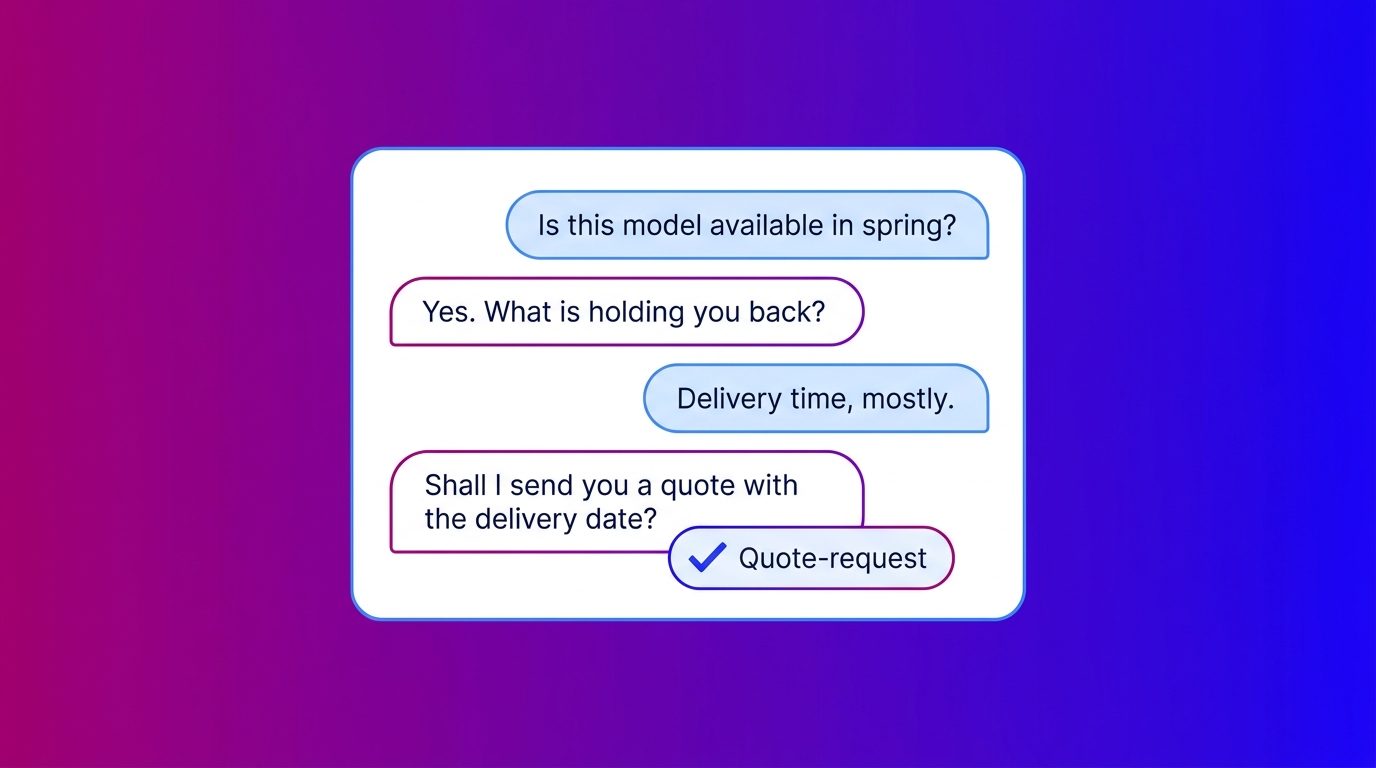
Take Rick. One evening he is on a car dealer’s website and sees the new hatchback model he has had his eye on. His current car is due for replacement, so he clicks through for more information. He reads that this model will only be available next spring and starts to have doubts about that timing. He searches online for more information, finds little about delivery times and postpones his decision.
The next day he starts a chat conversation on the dealer’s website and receives a reply within seconds from chat specialist Martin. Martin first listens to Rick, then asks specific questions and then gives him more information about the delivery time. Next, Martin guides Rick’s decision-making by steering on three elements: seeing the importance of the change, having confidence that he can realise it, and setting priorities.
Through Martin’s listening ear and then useful advice about the delivery time, Rick is convinced that he wants to change and has found his own motivation. In the second phase of motivational interviewing it is mainly about developing a plan to realise the change. By asking questions, Martin stimulates Rick to formulate his wishes and possibilities himself. In the end Rick asks for a quote for the new model, and Martin brings in the lead.
Why is motivational interviewing important?
Conversation techniques are ways to get more out of conversations, so you achieve more during customer contact. With these techniques you use conversation skills to communicate effectively. Techniques such as motivational interviewing help you convey your message clearly, make the other person feel heard and ultimately motivate further interest in your product or service. That is why motivational interviewing can make the difference between a decent conversation and a great conversation.
So think in advance about how best to apply your conversation style in face-to-face and digital conversations. Try out whether open or closed questions work better, whether a direct or indirect approach suits the other person, or whether you should mainly act as a listening ear. There are different techniques that can work, and it is important to try out which conversation style works best for your business. Finally, ask the people you talk to for feedback. By holding conversations more often and processing that feedback, you master every aspect of motivational interviewing. The broader context of good service conversations is covered in how to improve customer service.
Would you rather outsource your customer contact?
You can, at Bconnect. If you choose to manage all digital customer contact yourself with your own staff, that often costs extra training, time and money. The staff responsible for digital conversations are often busy with other tasks, so conversations, and therefore leads, are missed. From experience we know that outsourcing live chat and other messaging channels delivers the best result for most businesses. Wider opening hours, a quick first response, trained specialists and ongoing optimisation are the main reasons, and they can often be achieved at lower cost than arranging it internally.
So make conversations human through motivational interviewing with live chat specialists. Our chat specialists are prepared, after a rigorous selection and extensive training, to help your customers and visitors via live chat, WhatsApp and Messenger. In that training they are trained in motivational interviewing and other important conversation techniques and skills needed to bring customers in. They are available from 08:00 to 23:30, seven days a week, and AI covers the hours outside that.
Curious about the options for outsourcing your online customer service? Or would you rather chat yourself? Get in touch without obligation, so we can see what suits your organisation best.
Frequently asked questions about motivational interviewing
What is motivational interviewing in customer contact?
Motivational interviewing is a collaborative conversation style for strengthening a person’s own motivation and commitment to change. In customer contact you use it to help a hesitant visitor find their own reasons to take a next step, such as booking an appointment or requesting a quote.
What are motivational interviewing techniques for chat?
Listen first, ask open questions, reflect back what the customer says and let the customer formulate their own wishes and possibilities. Then help them make a concrete plan, such as a test drive or a quote, instead of pushing for a decision.
What is the difference between motivational interviewing and convincing?
Convincing puts the argument on your side and often provokes resistance. Motivational interviewing draws the reasons for change out of the customer themselves, so the decision feels like their own and holds up better afterwards.
Does motivational interviewing work via live chat?
Yes. Chat gives you time to ask questions and reflect, and the customer can read back the conversation. The key is that a person who recognises doubt and asks follow-up questions is holding the conversation, or that AI hands over to a person at that moment.
How do you train motivational interviewing in a customer service team?
Collect feedback after conversations, read back chats and look at how often a conversation ends in a concrete next step such as an appointment or a quote. Try out different questioning styles and keep the ones that work for your customers.